 Kousatsu NoteReading the stories of games, films and anime through their own words
Kousatsu Note / Elden Ring / World & gods
 GamesElden Ring World & gods
What Is Dominula, Windmill Village, in Elden Ring? The Villagers' Endless "Festivities", Tools Made of Human Bone, and the Fear of Being Skinned
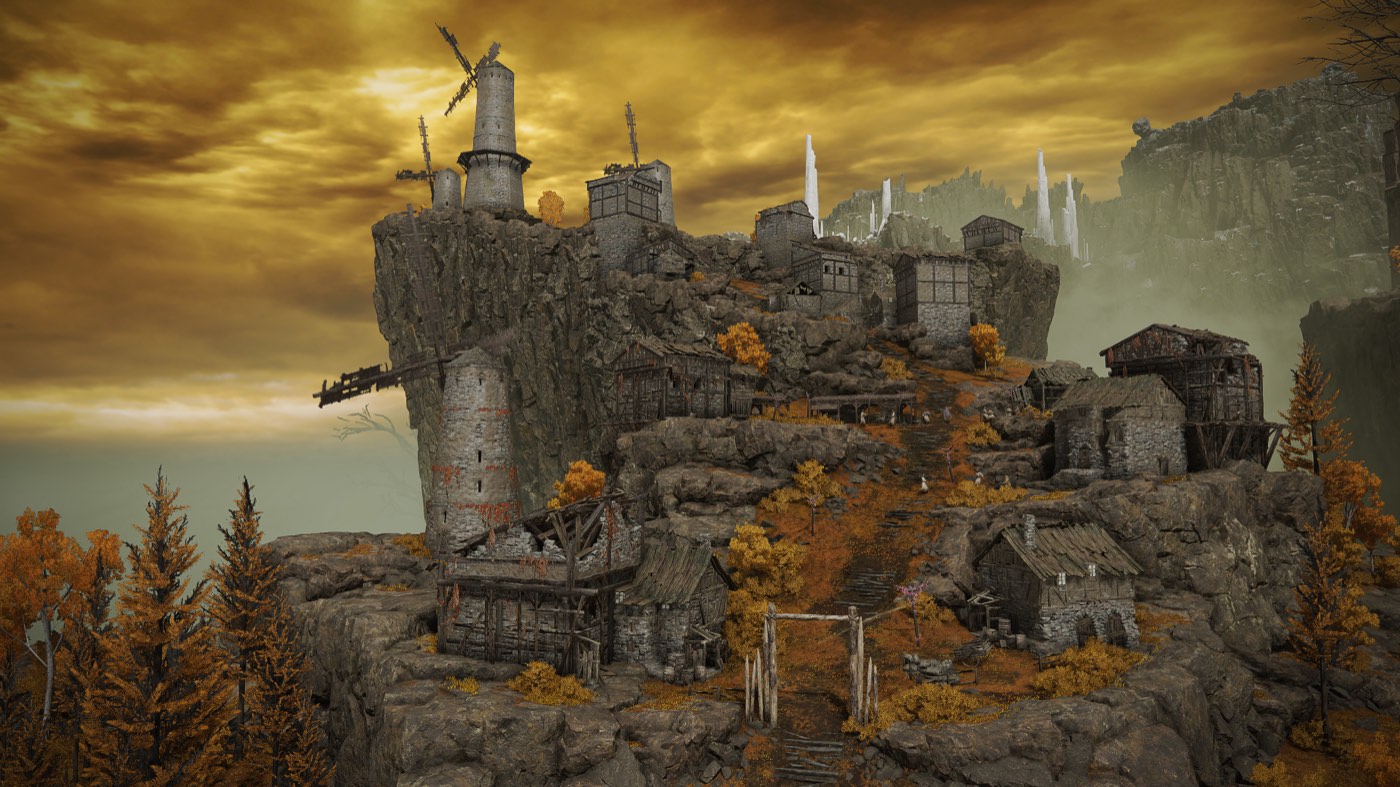
Dominula, Windmill Village, is a village of many windmills in the north of the Altus Plateau. Its villagers wear hoods decorated with flowers, hold ceremonial tools adorned with many-colored fabrics, and dance on and on, absorbed in some festival. But those tools are crafted from human bone, and their ceremonial garb is faintly bloodstained. At the edge of the village, a spirit cowers, saying "I hear a festive melody... No, no, don't skin me..." And on the hill stands a Godskin Apostle, carrying the Godskin Peeler. Dominula's festivities, we think, look festive but are a terrible celebration bound up with a rite of skinning people. What the festival celebrates, though, is written nowhere.
What kind of place is the Windmill Village?
In the north of the Altus Plateau, atop a steep crag, stands a village of many windmills. This is Dominula, Windmill Village.
Enter the village, and the villagers are dancing in a ring. Wearing hoods decorated with flowers, holding tools adorned with colourful cloth, as if in the middle of a festival. So absorbed are they in the dance that they do not notice the player even when you come close.
But if a villager who is not dancing spots you, they all attack at once. And the ceremonial tools in their hands are nothing like their cheerful decorations.
What are the villagers’ garb and tools?
The villagers’ hoods say:
Hood worn by dancers at the festivities in Dominula, the village of windmills. Decorated with many-colored flowers.
—— Festive Hood
Decorated with many-colored flowers. So far, the attire of a peaceful village festival. But the garb’s description differs by just one line:
Ceremonial garb worn by dancers at the festivities in Dominula, the village of windmills. Faintly bloodstained.
—— Festive Garb
Faintly bloodstained.
And the ceremonial tools the dancers hold:
Sickle decorated with flowers and many-colored fabrics. Ceremonial tool used by dancers during the festivities of Dominula. Its attacks can slip through an enemy’s guard. Crafted from human bone. Grants trace amounts of runes on landing attacks.
—— Celebrant’s Sickle
Crafted from human bone.
The tools decorated with flowers and cloth were made from human bone. The villagers also carry a cleaver, a hammer like a skull, and a rake like a ribcage. All are decorated with the same colourful cloth, and all are described as ceremonial tools used by dancers during the festivities of Dominula.
Pretty flower decorations, tools made of human bone, bloodstained garb. Beneath their festive look, Dominula’s festivities plainly hide the smell of blood.
Who is the spirit who begs “don’t skin me”?
This is the heart of every Windmill Village theory.
At the edge of the village, a spirit is cowering. Speak to it, and it mutters in a terrified voice:
Eek… I hear a festive melody… No, no, don’t skin me… My hide is filthy, I swear…
—— Spirit at Dominula, Windmill Village
I hear a festive melody… No, no, don’t skin me…
When the festive song is heard, someone gets skinned. That is what the spirit fears. And it tries to avoid being skinned by saying its own hide is “filthy”.
My hide is filthy, I swear.
From the way it says this, the skins taken in the festival seem to have needed to be clean. Dominula’s festivities were not just a dance; they were bound up with a rite of skinning people.
Who is the Godskin Apostle on the hill?
On the hill above the village, at the highest point, stands a tall, thin figure in garb of sagging white skin. A Godskin Apostle.
One of the Godskin Apostles’ weapons is called the “Godskin Peeler”:
Unique twinblade wielded by Godskin Apostles characterized by its disturbing design. One end features a sickle for slicing attacks while the other boasts a winding spike for boring into flesh. Much skill is required to wield this weapon due to its asymmetric nature.
—— Godskin Peeler
And the apostles’ attire is sewn together from smooth skin:
Hood made by sewing together patches of smooth skin. Worn by the Godskin Apostles. The apostles, once said to serve Destined Death, are wielders of the god-slaying black flame.
—— Godskin Apostle Hood
Made by sewing together patches of smooth skin.
An apostle who carries a weapon for peeling skin, and wears sewn-together skin. And in the village where that apostle stands, a spirit afraid of being skinned. For us, Dominula’s festivities may have been a festival to welcome the Godskin Apostle, or to make offerings to it. The bone tools the villagers hold as they dance may have been made in the course of that festival. More on the Godskin Apostles in Who Are the Godskin Apostles?
But no text says “the festivities are for the apostle”. This is our reasoning.
Are the villagers sane?
The dancing villagers do not stop even when the player comes near. If one who is not dancing spots you, they all attack at once. The whole village keeps up its festivities as if possessed.
After the Elden Ring shattered, many in the Lands Between lost their minds. Kalé, the merchant at the Church of Elleh, also says “the land has been tainted by madness since the shattering of the Elden Ring.” Dominula’s villagers, too, may be trapped inside the festival dance, carrying on a celebration that never ends. More in Who Is Merchant Kalé?
Dominula and Millicent
At Dominula, when you fight the Godskin Apostle on the hill, you can summon Millicent, the swordswoman afflicted with rot, as an ally. Millicent passed through this village on her journey after Malenia’s fate.
In a village where a festival of flowers and bone goes on, Millicent, carrying the rot within her, takes on a Godskin Apostle. Dominula is also one scene in Millicent’s journey. More in Who Is Millicent?
What the Japanese text says
This site reads the game in the original Japanese. The spirit’s plea uses a heavier word there.
- “My hide is filthy, I swear.” The Japanese is 「俺の皮は、穢れているぞ…」: my skin is defiled, you know. 穢れ is not dirt but defilement, the same word the Golden Order uses for Omens and those it casts out. In Japanese, the spirit protects itself by claiming to be defiled; the skins the festival wants seem to be the undefiled ones.
- “Decorated with many-colored flowers.” The Festive Hood’s Japanese adds 可憐に: 「色とりどりの花で、可憐に飾られている」, charmingly decorated with many-colored flowers. The sweetness makes the bloodstains in the next item hit harder.
- “I hear a festive melody.” 「祝祭の歌が聞こえてくる」: I can hear the song of the festival coming. 歌 is a song, sung by voices, not just a melody.
What we still do not know
What Dominula’s festivities celebrate is written nowhere.
Whether the festivities are really tied to the Godskin Apostle is not stated directly either. It is our reasoning, from a spirit afraid of being skinned and an apostle who peels skin.
And where the village’s name, “Dominula”, comes from is never told.