 Kousatsu NoteReading the stories of games, films and anime through their own words
Kousatsu Note / Elden Ring / People
 GamesElden Ring People
Who Is Sage Gowry in Elden Ring? His True Form, Why He Raised Millicent, and the "Children of the Scarlet Rot", Explained
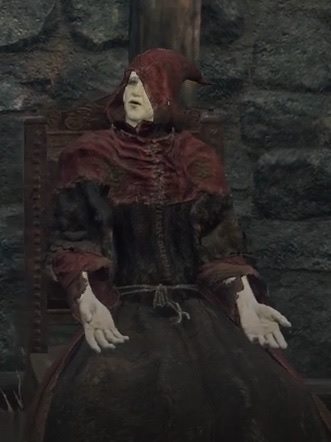
Gowry is not human. He is a pest born of the scarlet rot, one of the kindred of rot. He says so himself, "there are countless pests", and "we children of the scarlet rot". His goal is to make Malenia the Goddess of Rot. To that end he raised Millicent as a "bud", and in the end tried to have the Tarnished betray her so she would become a "flower". Even so, we do not think his affection for Millicent was a lie. That is what makes him so frightening.
Who is Gowry?
He is an old man living in a shack in eastern Caelid, just before the town of Sellia.
Oh, a pleasure to see you, a pleasure indeed. I am Gowry. A great sage, in my day, anyway. I’d hoped to ask a favour, when one of your ilk came along.
—— Sage Gowry
His request: find a needle that can hold back the rotting sickness of a girl named Millicent. He is soft-spoken and properly grateful. At first he seems nothing more than a kind old man worried about a sick girl.
Follow the quest to its end, though, and this old man says something terrible.
What is he to Millicent?
After the needle is repaired, Gowry tells you how they are connected:
Well, I’m the one that found her. A mere babe, in the swamp of Aeonia. She is one of my dear daughters.
—— Sage Gowry
The swamp of Aeonia is where Malenia and Radahn fought, and where a great flower of scarlet rot bloomed. Millicent was a baby found in that swamp of rot.
One more thing catches the ear here: “one of my dear daughters”. Gowry has other daughters like Millicent. That phrase matters later.
Is Gowry not human?
He is not. He tells you so himself.
Attack Gowry partway through the quest, and he vanishes with these words:
We shall meet again, you and I. There are countless pests to choose from.
—— Sage Gowry
Go back to the shack, and he is sitting there again as if nothing happened:
Have you taken the lesson, now? Killing me is but an exercise in futility.
—— Sage Gowry
Gowry is a pest. And one that can be replaced if a single one is killed. The rotting lands of Caelid crawl with pale, long, worm-like creatures: the kindred of rot. The natural reading is that Gowry is one of those kindred, wearing a human shape.
What he says after you save Millicent makes it plain:
Would you disown us too? As your Mother did? We children of the scarlet rot?
—— Sage Gowry
“We children of the scarlet rot.” Gowry names himself as one of those born of the scarlet rot.
Is Gowry’s voice hidden in an incantation?
For us, this is the most chilling part.
Here is the description of Pest Threads, a rot incantation you can buy from Gowry:
Incantation of the servants of rot. Secretes countless sticky threads, launching them forwards. A technique of the pale pests who crawl through the lands afflicted by scarlet rot; the abandoned children of the goddess. “Do you have an interest in rot incantations?”
—— Pest Threads
Only the last line changes voice. It is less an item description than someone speaking to you.
And after you buy this incantation, Gowry says:
Do you have an interest in rot incantations? Then you might like to learn something of the history… of Malenia, goddess of scarlet rot.
—— Sage Gowry
The description’s last line is Gowry’s own voice. An incantation that says the pests are “children of the goddess” is sold by Gowry, who is a pest. Inside the description, Gowry seems to whisper what he really is.
A talisman depicting the pests’ joy uses the same idea of “children”:
A talisman depicting the exultation of pests. Raises attack power when poisoning or rot occurs in the vicinity. “Rot for the scarlet goddess. O scarlet blossoms, flourish in distant lands, and return to us, the unwanted children.”
—— Kindred of Rot’s Exultation
The pests are the children of Malenia, the Goddess of Rot. And Gowry is one of them.
What did Gowry want?
Gowry answers this himself:
Since Malenia fought Radahn, and the great scarlet flower blossomed in Aeonia, I have dedicated myself to her. And to the resplendence of the Order of Rot. The cycle of decay and rebirth.
—— Sage Gowry
Gowry’s goal is to make Malenia the Goddess of Rot, and to fill the world with the Order of Rot. To ripen fully, rot, and be born again. That, we think, is what “the cycle of decay and rebirth” means.
The condition for Malenia to become a goddess is written in the description of her technique:
Each time the scarlet flower blooms, Malenia’s rot advances. It has bloomed twice already. With the third bloom, she will become a true goddess.
When the scarlet flower blooms a third time, Malenia becomes a goddess. That third bloom is what Gowry waits for.
Malenia, for her part, was a demigod born with rot already inside her:
Miquella and Malenia are both the children of a single god. As such they are both Empyreans, but suffered afflictions from birth. One was cursed with eternal childhood, and the other harbored rot within.
Malenia herself fought that rot all her life. That is why Gowry laments, “Would you disown us too? As your Mother did?” The goddess he worships rejects the children of rot. Gowry’s wish was twisted from the start.
Why did he want Millicent killed?
Late in Millicent’s quest, Gowry is weeping. Ask him why, and he makes his request:
If you happen to be present for the girl’s fight with her sisters, I ask that you side with the sisters and kill Millicent. It must be done by your hand; no other. Millicent trusts you, rather deeply in fact. Sever that trust. Nurtured by betrayal, her bud will flower most vividly. When Malenia ascends to godhood, Millicent too shall be reborn. As a scarlet valkyrie.
—— Sage Gowry
To Gowry, Millicent was a “bud”:
The girl, Millicent. She is a bud. Green and undeveloped, waiting to flower into magnificence. What a wondrous day that will be. In truth, before her, I’d never seen a bud of such superior quality.
—— Sage Gowry
The despair of being betrayed by someone she trusted would turn the bud into a flower. And once flowered, Millicent would be reborn as a scarlet valkyrie when Malenia became a goddess.
Sending you for the needle, sending Millicent on her journey: all of it was for this “blooming”. The needle that held back her sickness was given, we read, not to save Millicent, but to keep her walking until she reached Malenia.
Defeat Millicent, and her prosthesis becomes a talisman. Its description follows Gowry’s words almost exactly:
The despair of sweet betrayal transformed Millicent from a mere bud into a magnificent flower. And one day, she will be reborn - as a beautiful scarlet valkyrie.
—— Millicent’s Prosthesis
The word “sweet” tells you whose point of view this is.
Who are Millicent’s “sisters”?
Gowry said Millicent would soon meet her “sisters”. Deep in the Haligtree, Millicent crosses swords with women who look very like her.
Millicent felt her own tie to Malenia too. The needle she finally gives up reads:
An intricately crafted needle of unalloyed gold. Removed by Millicent from her flesh. Bears no trace of befouled blood, but is faintly moist with dew. “There is something I must return to Malenia. The dignity, the sense of self, that allowed her to resist the call of the scarlet rot.”
Malenia’s will to resist was inside Millicent. That is how it reads. Gowry’s “one of my dear daughters” and “her sisters”, we think, are daughters born from the scarlet flower, something like fragments of Malenia. Millicent was the one among them who inherited the will to resist the rot.
That may be why Gowry called her the finest bud. The daughter who resists the rot hardest would bloom the most beautifully as a flower of rot. Gowry seems to have believed that.
Was Gowry’s love a lie?
We do not think so.
If Millicent is killed partway through her quest, Gowry breaks down in tears, without knowing who did it:
O Millicent, my daughter… Who would prune your sapling flesh? Such…such cruel and vulgar violence…
—— Sage Gowry
When Millicent pulled out the needle and turned against Malenia, too, he did not rage. He grieved.
Gowry truly loved Millicent as a daughter. It is just that his way of loving her, wishing she would one day bloom beautifully as a flower of rot, was a pest’s way of loving. This, we think, is what madness without malice looks like.
What the Japanese text says
This site reads the game in the original Japanese. Gowry’s lines shift in a few places that change what he is saying.
- “As your Mother did?” The English has Gowry call Malenia Millicent’s Mother. The Japanese never does. It says 「拒絶するのですか?マレニア様と同じように」: will you reject us? Just as Lady Malenia did? In Japanese, Gowry speaks of Malenia only with reverence, as “Lady Malenia”, and never states that she is Millicent’s mother. The “Millicent is Malenia’s daughter” reading is much more explicit in English than in the original.
- “Abandoned” and “unwanted” children. Pest Threads calls the pests “the abandoned children of the goddess”, and the Exultation calls them “the unwanted children”. Both are the same Japanese word, 落とし子 (otoshigo): offspring, often the child of a noble born outside the family line. The Japanese does not say they were abandoned or unwanted, only that they are her offspring. The sense of rejection in English comes later, from Gowry’s own lament.
- “A great sage, in my day, anyway.” The Japanese is more modest: 「かつては、賢者などと呼ばれておりました」, I was once called a sage, or some such. Gowry does not claim to have been great; others simply called him that.
- “The cycle of decay and rebirth.” The Japanese is 「爛熟輪廻の理」: the law of overripeness and reincarnation. 爛熟 is fruit so ripe it is about to rot, which fits the flower and bud imagery Gowry uses for Millicent.
- “There are countless pests to choose from.” The Japanese 「蟲は何匹もいるのですから」 is plainer: after all, there are many of us pests. It reads less like a taunt and more like a simple fact about what he is.
What we still do not know
How long this particular Gowry has worn a human shape is unknown. Since he says he was once called a sage, he must once have been known as a sage in the human world. What happened in those days is never told.
Whether Millicent’s sisters truly share her origin is not clear either. They look much like her, and Gowry calls them her “sisters”. That is as far as it goes.
And did the scarlet flower bloom a third time? The game never shows Malenia becoming a goddess. Whether Gowry’s wish came true is left, in the end, to the player’s choices.