 Kousatsu NoteReading the stories of games, films and anime through their own words
Kousatsu Note / Elden Ring / People
 GamesElden Ring People
Who Is Rogier in Elden Ring? Why the Sorcerer Who Chased the Night of the Black Knives Wanted to Save Those Who Live in Death
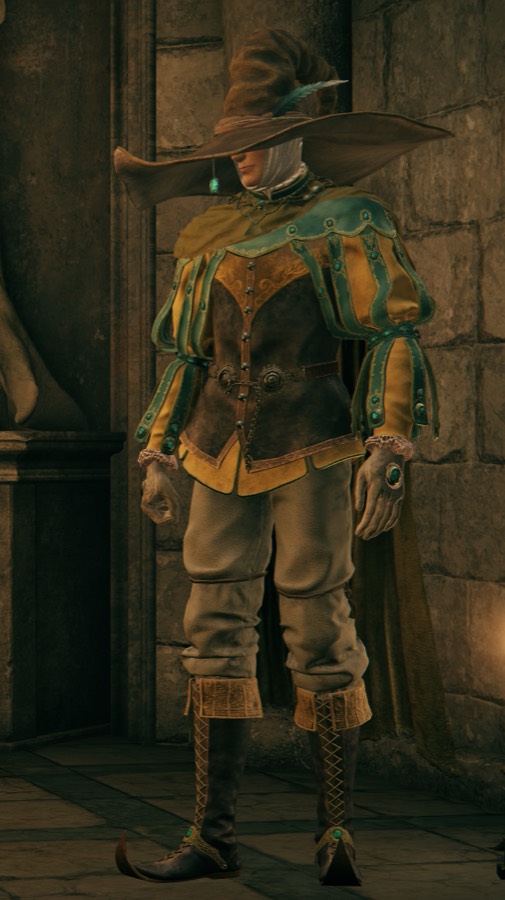
Rogier is a sorcerer who was chasing the truth of the Night of the Black Knives. Having disturbed the "misshapen corpse" beneath Stormveil Castle too much, he can no longer move, and keeps up his research sitting at the Roundtable Hold. From the Black Knifeprint the player brings him, he identifies Lunar Princess Ranni as the one who orchestrated that night. Rogier wants Ranni's cursemark of Destined Death because he wants to save Those Who Live in Death. "These souls have committed no offence," he says; they "happened to touch upon a flaw in the Order." His old friend D was on the side that hates them. Calling himself a liar, Rogier chooses a different road from his friend, and dies at the Roundtable Hold before he reaches his answer. Rogier, we think, kept searching not for the correct answer, but for an answer that stands beside the weak.
Who is Rogier?
Early on in Stormveil Castle, a sorcerer in a wide-brimmed hat is hiding at the back of a small chapel:
Ah, nice to meet you. The pleasure’s mine. Rogier’s the name. A sorcerer, as you might have guessed. I’m looking for a little something, here in the castle. When I’m not hotfooting it from the troops, that is.
—— Sorcerer Rogier
He is gentle in manner, and a little light-hearted. When the player says they are here to challenge Godrick, he replies:
You can see it then, I take it? The guidance of grace. Well, enjoy it while you can. I’m Tarnished, like you. But unlike you, I’ve seen neither hide nor hair of this guidance for the longest time. Still, I won’t forget how it felt when I first came here, to the Lands Between.
—— Sorcerer Rogier
I’ve seen neither hide nor hair of this guidance for the longest time. Rogier is a Tarnished who has lost the guidance of grace. Even so, he had slipped into Stormveil Castle, looking for what he could still do.
His weapon reflects the man, too:
Piercing sword of superior quality, featuring intricate ornamentation. Signature weapon of the sorcerer Rogier. High dexterity is required to wield the blade to its full potential, but mastery is a sight to behold, characterized by a flowing style which excels in successive attacks.
—— Rogier’s Rapier
What was he looking for in Stormveil Castle?
After defeating Godrick and returning to the Roundtable Hold, you find Rogier sitting on the floor:
Ah, we meet again after all. I apologise for any offence given by my bearing, but I’m quite unable to move, you see.
—— Sorcerer Rogier
What Rogier was after in the castle was the “misshapen corpse” beneath Stormveil. Ask him, and he explains:
The misshapen corpse under Stormveil? That is a sacred relic. Of the black knives plot. As that famed night of assassination is known. It happened during the Golden Age of the Erdtree, long before the shattering of the Elden Ring. Someone stole a fragment of the Rune of Death from Maliketh, the Black Blade. And on a bitter night, murdered Godwyn the Golden. That was the first recorded Death of a demigod in all history. And it became the catalyst. Soon, the Elden Ring was smashed, and thus sprang forth the war known as the Shattering.
—— Sorcerer Rogier
The first recorded Death of a demigod in all history. Rogier was investigating the “Night of the Black Knives”, where the story began. More in What Happened on the Night of the Black Knives? and Who Is Godwyn the Golden?
Why can he no longer move?
Rogier speaks of his body half in jest:
I once wished to become a scholar, you see. I’ve spent many an hour scouring the archives for knowledge of that fateful plot. The world has grown crooked, and if you intend to put it to rights, You’d better understand what happened to make it this way, mm? And…that thing is to blame for the shape I’m in now… I urge the utmost caution. Don’t disturb the corpse more than necessary…
—— Sorcerer Rogier
Don’t disturb the corpse more than necessary.
The corpse beneath Stormveil is thought to have spread from the undying body of Godwyn, whose soul alone was killed. While studying it, Rogier was eaten into by Death, and his body stopped moving, starting from his legs.
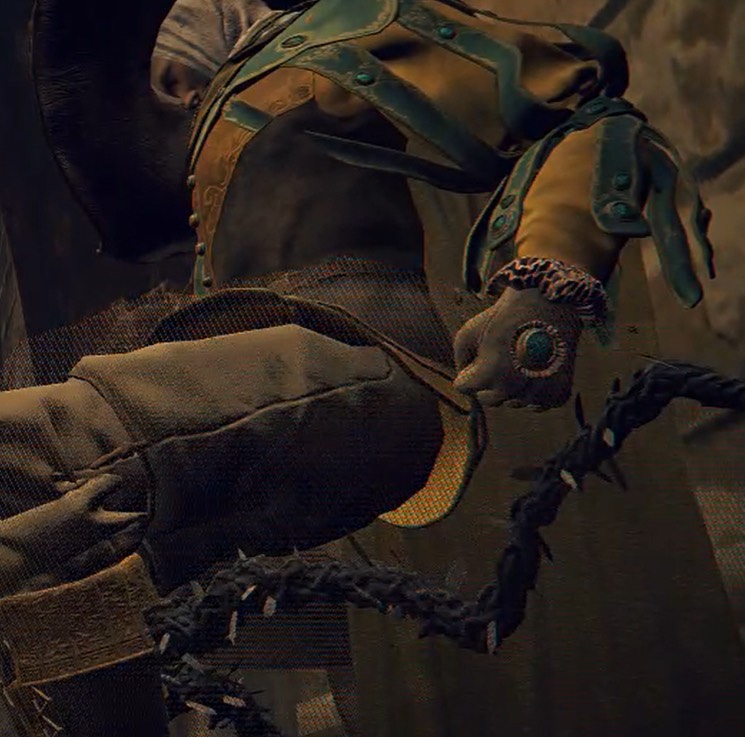
Rogier himself later says that “half my body has been suffused with Death.” He studied the beginning of the world’s crookedness in order to put it right, and in return was swallowed by that crookedness himself.
Who orchestrated the Night of the Black Knives?
Rogier’s research makes a big leap thanks to a mark the player brings back:
On the Night of the Black Knives, someone stole a fragment of Death from Maliketh, the Black Blade, and imbued its power into the assassins’ daggers. This mark is evidence of the ritual, and hides the truth of the conspiracy.
Taking the knifeprint, Rogier says:
Though only a fragment, a very specific ritual had to be performed to impart the power of the Rune of Death. Traces of the one who performed the rite are sure to remain in the imprint… Half my body has been suffused with Death. I’m certain it will help me see.
—— Sorcerer Rogier
And he comes back with an answer:
Now, I have a fairly good idea who performed the rite upon the blade. The person who orchestrated the Night of the Black Knives. Lunar Princess Ranni. One of the children born to King Consort Radagon and his first wife, Renalla. Demigod and sister to General Radahn and Praetor Rykard. Her’s was the name I discovered in the imprint.
—— Sorcerer Rogier
Her’s was the name I discovered in the imprint. Rogier is the first in the game to work out that Lunar Princess Ranni was behind the Night of the Black Knives. More in Who Is Ranni the Witch?
Why did he want Ranni’s cursemark?
This is the heart of every Rogier theory.
With the culprit found, Rogier asks the player for one more thing:
If Ranni truly is the one who plotted that fateful night, then she should bear the cursemark of Destined Death somewhere upon her flesh. I would like you to procure it for me. And then all will be laid bare. I will have the answers I have sought for so long.
—— Sorcerer Rogier
Why does he need the cursemark? When the player asks, Rogier reveals his true purpose:
I’m afraid there’s something I must tell you. Do you know of Those Who Live in Death? The very notion of life in death defies the Golden Order. By D’s account, these defiled fiends must be expunged. But truth be told, I seek the cursemark to save them. You may find this peculiar, but I discovered something in my examination of the Night of the Black Knives. These souls have committed no offence. They have every right to life, only, they happened to touch upon a flaw in the Order.
—— Sorcerer Rogier
These souls have committed no offence. They happened to touch upon a flaw in the Order.
In the world of the Golden Order, Those Who Live in Death have been treated as defilement: skeletons rising from graveyards, the ones who cannot die. But while studying the Night of the Black Knives, Rogier realised they are not to blame. On that night Death was stolen and the Order was wounded. Those who happened to touch that wound simply became unable to die.
More on Those Who Live in Death in Who Is Godwyn the Golden? and Who Is Fia?
Rogier sought the “answer” to the Night of the Black Knives in order to put the world’s crookedness right. And his way of putting it right was not to erase Those Who Live in Death, but to save them.
What does Rogier think about glintstone sorcery?
What Rogier says about the first battle art he teaches you also shows how he thinks:
The battle art you’ve learned is of the glintstone family. They were conceived at the great Academy of Raya Lucaria, to the north of this castle. In the past, they obeyed laws which contravened the Golden Order, or so I’m told. Fascinating, isn’t it? That the Golden Order was pliable enough to absorb practices that contradicted itself in the past. With the Order broken, twisted, and in need of repair, such adaptability is more important now than ever.
—— Sorcerer Rogier
The Golden Order was pliable enough to absorb practices that contradicted itself.
For us, this line is the core of who Rogier is. The openness to take in even what contradicts you. Not to cast out Those Who Live in Death as defilement, but to look for a way to accept them. The repair of the Order that Rogier sought, we think, had that shape.
What was his relationship with D?
Rogier once had a friend he travelled with: D, who hunts Those Who Live in Death.
Ah, so you’ve met D. D is an old friend. We found ourselves journeying together for a time, bound by our exploration of Death. But our paths have since diverged. Never again to cross. Though that’s hardly an uncommon fate for two friends.
—— Sorcerer Rogier
Bound by our exploration of Death. Both of them studied Death. But D chose the road of hunting Those Who Live in Death, and Rogier chose the road of saving them.
Yes, indeed. If D knew what drives me now, he would surely boil over with rage. Or perhaps, he would even feel some pity. But no need to fret, none of that will come to pass. I can tell a good lie when I need to.
—— Sorcerer Rogier
I can tell a good lie when I need to.
Rogier is likely hiding his true purpose even from his friend. And in the way he imagines D’s anger, there is a hint that even being shouted at would be welcome, if it meant his friend still cared.
D, for his part, worried about Rogier too. His words are in Who Is D, Hunter of the Dead? A friend who was once a fine spellblade, being pierced by defiled thorns. The two walked roads that would never cross again, each still thinking of the other.
How does Rogier die?
When the player tells him they have entered Ranni’s service, Rogier says:
Hmm. Maybe I should tell you. Lately, I feel I’m on the precipice… Of falling into a deep…fathomless slumber. And I have an inkling it could spell trouble for you, somehow. So I just wanted to get the apology out of the way, beforehand.
—— Sorcerer Rogier
After a while, Rogier stops answering when spoken to, and dies at the Roundtable Hold. He was just short of his answer.
Beside his body is a letter in shaky handwriting. It says that D had a younger brother, that the brother lies sleeping by an aqueduct near Nokron, Eternal City, and that beyond it Rogier came face to face with the “Prince of Death”. To the very end, Rogier was thinking about the clues to the Night of the Black Knives, and about his friend D.
And late in the story, deep underground, Rogier appears before the player once more, as one of Fia’s Champions. That he stands beside Fia, who tried to embrace Those Who Live in Death, seems to show quietly which side Rogier chose in the end. More in Who Is Fia?
What the Japanese text says
This site reads the game in the original Japanese. Rogier’s words about D, and about Those Who Live in Death, are softer there.
- “I can tell a good lie when I need to.” The Japanese is 「私は嘘つきですから」: because I am a liar. Not a skill he uses when needed, but simply what he is. He calls himself a liar.
- “He would surely boil over with rage. Or perhaps, he would even feel some pity.” 「きっと、激怒してくれると思いますよ/…それとも、少しは悲しんでくれるでしょうか」: I think he would surely be furious for me… or would he be a little sad? The くれる makes the anger something D would do for him, a kindness. And the Japanese has sad, not pity.
- “They have every right to life.” 「彼らは何も侵していない。ただ懸命に生き、それ故に、律の傷に触れてしまっただけなのだと」: they have violated nothing. They only lived as hard as they could, and because of that, touched a wound in the Order. The Japanese speaks not of rights, but of how hard they lived. Living earnestly is itself what led them to the wound.
- “Pliable enough to absorb.” 「対立する理をすら受け入れる、寛容なもの」: tolerant enough to accept even opposing principles. 寛容 is tolerance or generosity, a moral word rather than pliable.
- “That is a sacred relic.” 「あれは遺物なのですよ」: it is a relic. There is no sacred in the Japanese.
- “Half my body has been suffused with Death.” 「半ば死に侵された身」: a body half invaded by death. 侵す is the same verb as in 何も侵していない. The Japanese plays the two against each other: Those Who Live in Death have violated nothing, while Rogier himself has been violated by Death.
What we still do not know
What Rogier actually meant to do with Ranni’s cursemark, had he obtained it, is not told.
The cause of his death is not clear either. Whether it was disturbing the misshapen corpse too much, or something else, we do not know why he died as if falling asleep.
And how much of his heart did Rogier hide from D? These are the words of a man who called himself a liar, so we cannot know whether to take all of them at face value.