 Kousatsu NoteReading the stories of games, films and anime through their own words
Kousatsu Note / Elden Ring / World & gods
 GamesElden Ring World & gods
What Is a Wandering Mausoleum in Elden Ring? The "Soulless Demigod" Inside, and What the Headless Knights Guard
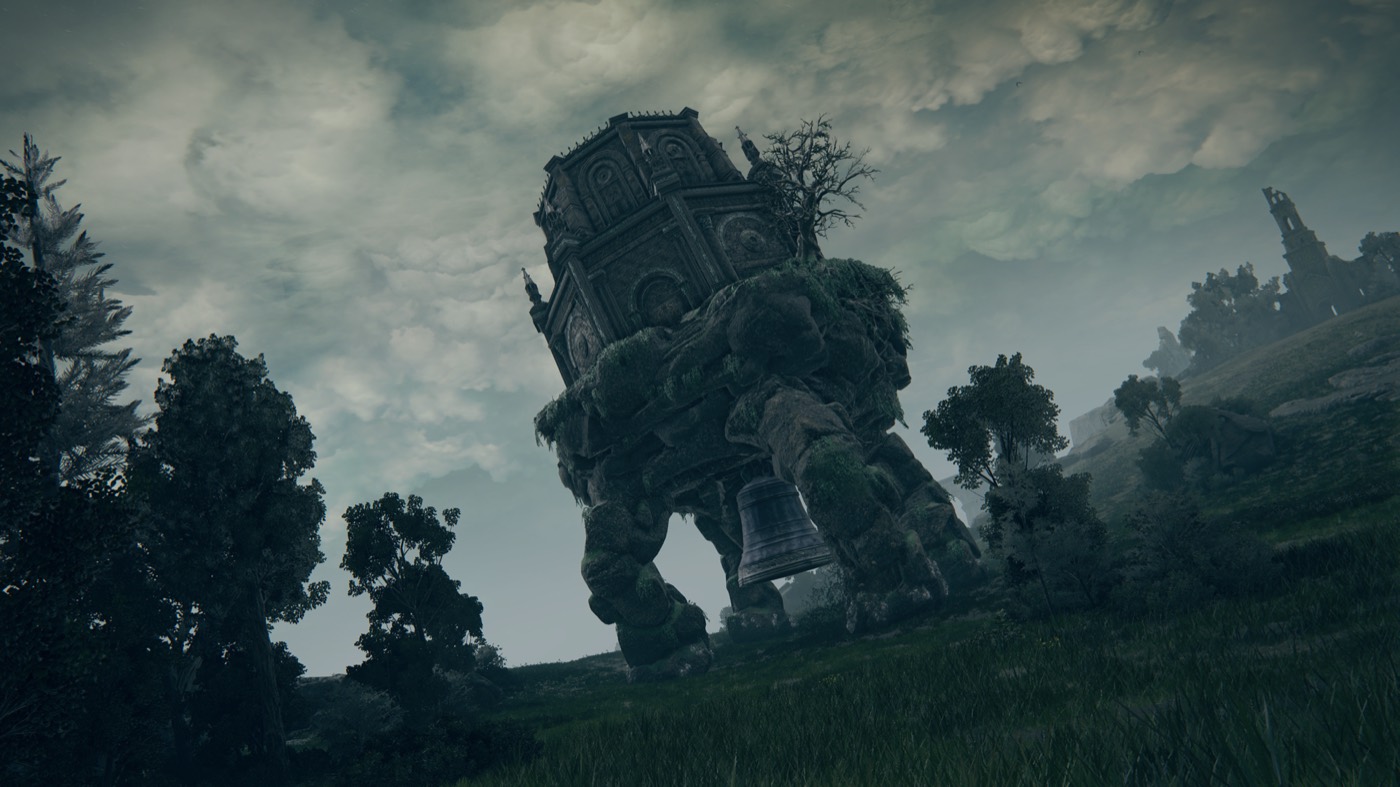
A Wandering Mausoleum is a resting place for the bodies of "soulless demigods". A spirit, seeing one, laments, "O Marika, Queen Eternal. He is your unwanted child." What sleeps inside reads as a child of Marika who has lost its soul. The mausoleum is guarded by knights and soldiers who severed their own heads to follow their masters into death. The "eclipsed sun" on their shields is said to be the protective star of soulless demigods, keeping Destined Death at bay. The mausoleums keep walking and ringing their bells, we think, because they are carrying, in mourning, demigods who can neither die nor live. But who the demigod sleeping inside is, is never written at all.
What is a Wandering Mausoleum?
On the Weeping Peninsula, in Liurnia of the Lakes and elsewhere, giant stone buildings walk slowly about on four legs. These are the “Wandering Mausoleums”. Inside, a headless body lies on an altar, and you can duplicate a boss remembrance once.
Who sleeps inside the mausoleum?
This is the heart of every Wandering Mausoleum theory.
The ashes of the soldiers who guard the mausoleums say what a mausoleum is:
Ashen remains in which spirits yet dwell. Use to summon the spirits of five mausoleum soldiers. Spirits of five headless soldiers who confound foes by disappearing and reappearing at will. The mausoleum is where the bodies of soulless demigods are lain to rest, and these soldiers followed their masters into Death by severing their own heads from their bodies.
—— Mausoleum Soldier Ashes
The mausoleum is where the bodies of soulless demigods are lain to rest. Inside the Wandering Mausoleums sleep demigods who have lost their souls.
And a spirit at the Church of Pilgrimage on the Weeping Peninsula laments:
The mausoleum prowls. Cradling the soulless demigod. O Marika, Queen Eternal. He is your unwanted child.
—— Spirit at the Church of Pilgrimage
He is your unwanted child. The soulless demigod asleep in the mausoleum reads as a child of Queen Marika. And one called her “unwanted child”.
Many of Marika’s children were born carrying something: horned Omens, a child carrying rot, a child forever young. The ones sleeping in the Wandering Mausoleums may also be children kept out of sight because of how they were born. More on Marika’s children in Who Is Queen Marika?
What does “soulless” mean?
What does it mean for a demigod to “lose its soul”? A hint lies with Godwyn the Golden on the Night of the Black Knives. Only Godwyn’s soul was killed; his body was left behind, unable to die. More in Who Is Godwyn the Golden?
The demigods sleeping in the mausoleums, too, are beings who lost their souls and were left as bodies only. Neither dead nor alive. That is why, we think, the mausoleums could only lay them in a “resting place” and keep carrying them.
What are the headless knights guarding?
Around the Wandering Mausoleums are headless knights and soldiers:
Armor worn by headless knights who endlessly guard the Wandering Mausoleum. The wing-shaped ornament on its back evoke the Deathbird. A self-inflicted curse that ties the spirits of these loyal knights to the land, having willingly beheaded themselves so that they may serve their masters in death.
—— Mausoleum Knight Armor
A self-inflicted curse that ties the spirits of these loyal knights to the land. The knights cut off their own heads to follow their masters, and remain as spirits to guard the mausoleums. The ornament on their backs comes from the Deathbird. More on the Deathbirds in What Are Deathbirds and Death Rite Birds?
And the knights’ shields bear a certain crest:
Metal greatshield painted with a sun in eclipse. Carried by the headless mausoleum knights. The eclipsed sun, drained of color, is the protective star of soulless demigods. It aids the mausoleum knights by keeping Destined Death at bay.
—— Eclipse Crest Greatshield
Keeping Destined Death at bay. What the mausoleum knights guarded against was “Destined Death” reaching the soulless demigods. In the age of the Golden Order, Destined Death was removed, but a part of it was stolen on the Night of the Black Knives. To keep true death from ever coming to a demigod who has lost its soul. That, we think, was the headless knights’ task. More on Destined Death in Who Is Maliketh?
Why do they ring bells?
Some mausoleums have a great bell hung beneath their bodies:
Armor worn by headless soldiers who endlessly guard the Wandering Mausoleum. The surcoat depicts the mausoleum bell, which rings in constant mourning for the soulless demigods.
—— Mausoleum Surcoat
Rings in constant mourning for the soulless demigods. A Wandering Mausoleum is not just walking. It walks the Lands Between ringing its bell, mourning the demigod sleeping inside.
For us, the Wandering Mausoleums are funeral processions for children with nowhere to go. Carrying demigods who can neither die nor live, mourning them, walking a road without end. Children Marika called “unwanted”, guarded only by headless knights.
What the Japanese text says
This site reads the game in the original Japanese. The spirit’s line is harsher there.
- “He is your unwanted child.” The Japanese is 「おお、永遠の女王マリカよ。貴女の、醜い落とし子を抱いて」: O Marika, Queen Eternal, (the mausoleum wanders) cradling your ugly offspring. The English says unwanted; the Japanese says 醜い, ugly. And 落とし子 is the word for an illegitimate or cast-off child. The English also says “He”, making it one male child. The Japanese does not specify one or many, man or woman.
- “The mausoleum prowls.” 「霊廟がさまよっている」: the mausoleum wanders, lost. さまよう is to wander aimlessly. “Prowls” makes it sound like it is hunting; the Japanese makes it sound lost.
- “It aids the mausoleum knights by keeping Destined Death at bay.” The shield’s Japanese is 「彼らを、運命の死から遠ざけるという」: it keeps them away from Destined Death. In Japanese, “them” reads most naturally as the soulless demigods, not the knights. It is the demigods who are kept from death.
- “Rings in constant mourning.” 「魂なきデミゴッドを悼むように/ずっと鳴り響いている」: keeps ringing, as if mourning the soulless demigods. The ように (“as if”) keeps it a little uncertain, an image rather than a fact.
What we still do not know
Who the demigod sleeping in the mausoleum is, is not written at all. A child of Marika, or someone else of her blood, we do not know.
Why they lost their souls is not told either.
And why do the mausoleums walk? Are they heading somewhere, or wandering with no aim? The spirit only says it “prowls”.