 Kousatsu NoteReading the stories of games, films and anime through their own words
Kousatsu Note / Elden Ring Nightreign / DLC
 GamesNightreign DLC
Who Is the Scholar in Nightreign? The Albinauric Descendant Who Sought the "Cleansing Tear", and the Dreglord
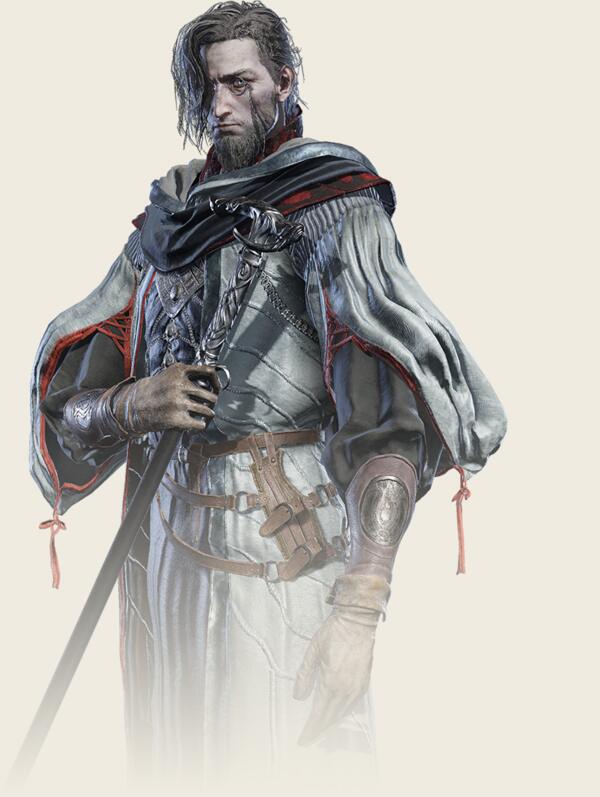
The Scholar is a member of the School of Hierodas, an academic who seeks knowledge through travel. A disease is making his body age abnormally fast. He came to Limveld to search for the "Cleansing Tear", written in an old book of his institution as "that which will save our kind from its fate". And his journal reveals that the Scholar is a descendant of the Albinaurics. The Cleansing Tear was a fast-acting medicine for a disease that once afflicted the Albinaurics. The Scholar leaves the Roundtable Hold and reaches the truth in the Research Annexe beneath Limveld. But he loses his body, and only wakes at the Hold after the Undertaker finds his primal core. At the end, the Scholar calms the Dreglord, a gathering of the flesh and souls scattered in battle, and writes that the Cleansing Tear "has not the power to change our fate", but "is an artifact of great import - let it be known to history." The Scholar, we think, is a seeker who came looking for salvation, and brought back not salvation but the truth.
Who is the Scholar?
The Scholar is a Nightfarer added in the DLC, The Forsaken Hollows. A grey-haired, bearded man in travelling clothes. His description says:
An academic who walks the Lands Between, and a member of the School of Hierodas who seeks knowledge through travel. He contracted a disease that causes abnormally rapid aging.
—— Scholar
His thrusting sword tells how the people of his school live:
A thrusting sword with an intricately engraved silver handle. The coloring is nicely subdued after years of attentive care. When sheathed, the sword serves as a cane to ease a traveler’s burden, like a companion who shares the trials encountered when traversing great distances. Graduates of the school all follow a similar path, readying themselves to be vessels to newfound knowledge.
—— Scholar’s Thrusting Sword
What did the Scholar come to Limveld to find?
The first entry of his journal:
Crossing the storm-tossed seas, I reached the land of my ancestors. According to my documents, there is an academy in which the great sage Hierodas passed down his knowledge — he for whom our institution is named. But what I seek above all else is the Cleansing Tear. There is a line concerning it found in a collection of folk tales I read back in the institution that I cannot help but dwell upon. “The Cleansing Tear is our desire manifest — that which will save our kind from its fate.”
—— Scholar’s journal (Chapter 1)
Crossing the storm-tossed seas, I reached the land of my ancestors.
To the Scholar, Limveld was the land of his “ancestors”. And what he sought was the “Cleansing Tear”, handed down by his institution as that which would save their kind from its fate.
What is the Scholar?
This is the heart of every Scholar theory.
In a study hidden beneath a marsh in Limveld, the Scholar finds a nobleman’s diary:
I discovered a nobleman’s diary in a study hidden beneath a marsh. Deciphering it affirmed the connection between the Cleansing Tear and the Albinaurics. The vision also pointed to a place known as the Research Annexe. Could it be there that we, the Albinaurics, find our manifest desire and reclaim our fate?
—— Scholar’s journal (Chapter 4)
We, the Albinaurics.
The Scholar was a descendant of the Albinaurics. The people persecuted in Elden Ring as “lifeforms made by human hands”. Their descendants went on through the generations at an institution beyond the Lands Between, still searching for a way to save their kind from its fate. More in Who Are the Albinaurics?
That the Scholar’s body is aging abnormally fast from a disease may also be tied to the Albinaurics’ fate. The Albinaurics of Elden Ring, too, carried an affliction by which their legs, and then their lives, would fade.
What was the Cleansing Tear?
The Scholar leaves the Roundtable Hold and reaches the “Research Annexe” beneath Limveld. What he finds there is the Cleansing Tear:
Fast-acting medicine for a disease that afflicted the Albinaurics that works by removing invasive contaminants. The vassal who developed the medicine did so by testing it on his own body. It was successful, and used to treat patients, but the vassal himself passed, his sickness already too advanced. Both the disease and the cure are not mentioned in the annals of history, and the person responsible for their omission is unknown.
—— Cleansing Tear
Fast-acting medicine for a disease that afflicted the Albinaurics.
Once, a disease struck the Albinaurics. A vassal made a cure, testing it on his own body. But the vassal himself was not saved. And both the disease and the cure were erased from history.
A letter left in the Research Annexe says, in substance, that the disease is spreading, that no one knows how many have died, and asks whether it is the Cuckoos’ doing.
The Cuckoos are the knights of the academy who, in Elden Ring, persecuted the Albinaurics for their “defiled blood”. Was the disease that struck the Albinaurics someone’s design? The Scholar’s records leave that suspicion behind.
What happened to the Scholar after he lost his body?
Having touched the truth in the Research Annexe, the Scholar loses his body. What the Undertaker, who came looking for him, finds is the “primal core” drawn from his body:
The primal core extracted from the Scholar’s body. A silver organ with pulsing veins. Still pumping despite its detachment, its flesh writhes with desire for a new host. The core is undeniable evidence that the Scholar is an entirely different form of life.
—— Scholar’s Primal Core
A silver organ with pulsing veins. Still pumping despite its detachment, its flesh writhes with desire for a new host.
The Albinaurics’ origin was a “drop”. Inside the Scholar’s body was a silver core, which was trying to grow a new body. From this primal core, the Scholar regains his body and wakes at the Roundtable Hold:
My memories returned in vivid clarity after my reawakening at the Roundtable. I have known this uncanny sensation in my frame before - this feeling that my body had been lost. Once I was able to move my arms and legs, I finally stood up.
—— Scholar’s journal (Chapter 8)
More on the Undertaker in Who Is the Undertaker?
What is the Dreglord?
In the DLC, a threat other than the Nightlord appears: the “Dreglord”. The Scholar explains that it is the countless flesh and souls fallen and scattered in battle, gathered into a single power to rival the Nightlord; that the most terrible will in this world is vengeance; and that there is no reason or logic in it, only a power too pure to fade until it achieves its aim.
Its relic tells how it was born:
The night belonging to Straghess, left upon its defeat. The power of its namesake can be unlocked by performing a relic rite. The traces left behind by countless battles were pelted by rains, transported by muddy streams, and collected in deposits. This mixture of remorse, desperation, and sorrow eventually formed legs, stood of its own accord, and finally, voiced a curse that would be its mantra. “Smash, smash, smash the Night…”
—— The Night of Dregs
And the awakened Scholar had heard, in a dream, the voice of someone of the same blood. Someone from an unknown age, but truly of his blood, told him not to be caught by grudges, not to be swept away and buried in the dregs: all are trapped in the dregs, so heal the dregs themselves.
Trapped within the Dreglord may have been the grudges of Albinaurics who died of the disease, too. The Scholar fights not to defeat the Dreglord, but to “heal” it, and calms it. Afterwards he says the terrible threat has been quelled, and that this too may have been one of the sins to atone for, as sinners themselves.
What was the Scholar’s conclusion?
The Scholar entrusts his research records to the Undertaker, and asks her to see them through. And at the end of his journal, he writes:
Limveld is a sacred land under which sleep secrets and mysteries aplenty. What I have unearthed will change our understanding entirely, for I have found that which before was only known to us in books and legends. I know I will be called a madman, a liar, or worse, but I hope that those follow in my footsteps will be that much closer to the truth. Allow me to conclude my findings, having now come to the end of this grand romance. The Cleansing Tear is not a manifestation of our desires - it has not the power to change our fate. It is however, an artifact of great import - let it be known to history.
—— Scholar’s journal (Chapter 9)
The Cleansing Tear is not a manifestation of our desires - it has not the power to change our fate. It is however, an artifact of great import - let it be known to history.
The tear he sought, believing it would save their fate, could not change it. Even so, the truth of a disease and a cure erased from history deserved to be recorded. For us, the Scholar brought back not “salvation” but “truth”. And he left the task of waiting for whoever would receive those records to the Undertaker, who lives for so very long.
What the Japanese text says
This site reads the game in the original Japanese. The names, and his last line, differ a little there.
- “The School of Hierodas.” In Japanese, ヤロダス研究館, the Hierodas Research Institute. The English “school” and “institution” are both used for it.
- “Crossing the storm-tossed seas, I reached the land of my ancestors.” 「荒海を越え辿り着いた地は、祖の住まう世界」: the land I reached across the rough seas is the world where my forebears dwell. 住まう, dwell, is present tense; it sounds as though the ancestors still live there.
- “It is however, an artifact of great import - let it be known to history.” 「だがそれは、歴史に名を刻むべき代物であろう」: but surely it is a thing whose name should be carved into history. 歴史に名を刻む, to carve a name into history, answers the Cleansing Tear’s description, where the disease and the cure 「歴史から姿を消していた」, had vanished from history.
- “I know I will be called a madman, a liar, or worse.” 「私は覚悟している。詭弁者、狂人と罵られることを」: I am prepared to be reviled as a sophist and a madman.
- “The Dreglord.” In Japanese, 瓦礫の王, the King of Rubble. The English “dregs” are sediment left behind; the Japanese “rubble” is the wreckage of what has been destroyed.
What we still do not know
Where the School of Hierodas is, and when and how it began, is not told.
Whether the disease that struck the Albinaurics really was the Cuckoos’ doing is not clear either. The letter in the Research Annexe only asks it as a question.
And whose was the voice “of the same blood” that the Scholar heard in his dream? It may have been the vassal who left a note that he remained with the prototype of the cure, but nothing certain is written.