 Kousatsu NoteReading the stories of games, films and anime through their own words
Kousatsu Note / Elden Ring / People
 GamesElden Ring People
Who Is the Dung Eater in Elden Ring? Why the Man Who Grew the Seedbed Curse Called It a "Blessing"
The Dung Eater is a Tarnished who killed countless people and grew the "Seedbed Curse" in their corpses. A corpse afflicted by the Seedbed Curse cannot return to the Erdtree and stays cursed forever. The Dung Eater calls this curse "the reviled blessing". In the world of the Golden Order, those born cursed have been despised as defiled. By making everyone be born cursed, the Dung Eater means to make defilement ordinary. Offer Seedbed Curses to his body imprisoned beneath the Capital, and he gestates the "Mending Rune of the Fell Curse". The Dung Eater's wish, we think, was revenge from the side of the shunned, defiling Order itself. But why he became this way, and what cursed him, is barely told.
Who is the Dung Eater?
At the back of the Roundtable Hold, in a dim corner, sits a man whose whole body is covered in curse growths like tumours. Speak to him and he asks, without warning:
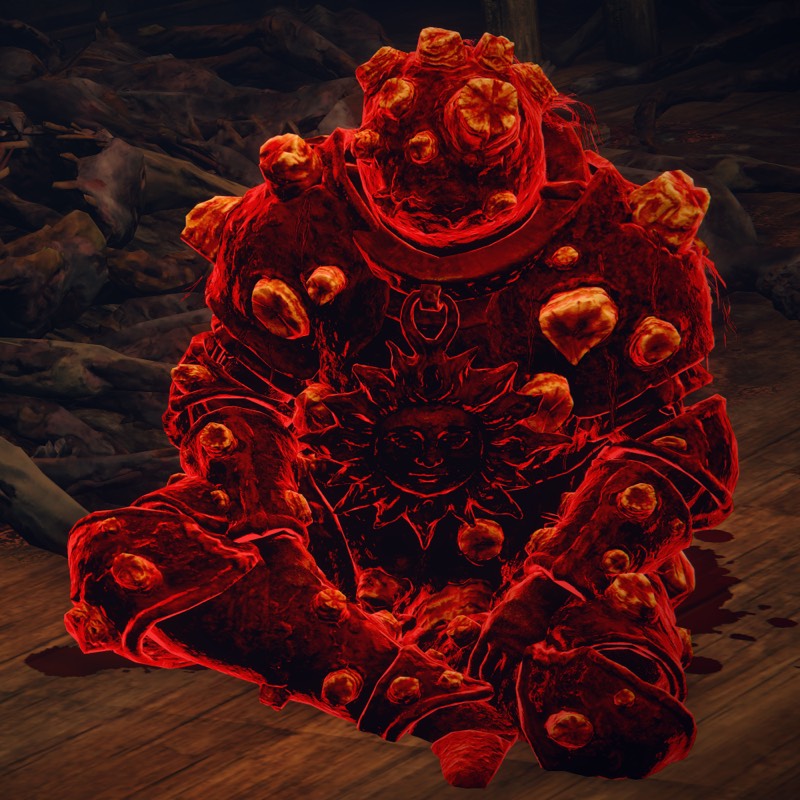
Have you ever felt the curse, with your whole being? The pox upon life itself, feared and despised by all. The reviled blessing. … Apparently not. You are but a lamb. A stranger to defilement. Ignorant of your own ignorance. You no longer interest me.
—— Dung Eater
The pox upon life itself, feared and despised by all. The reviled blessing.
His way of thinking is plain from the first words. He calls the curse a “blessing”. In a world where the Tarnished travel by the “guidance of grace”, the Dung Eater alone says the curse is his blessing.
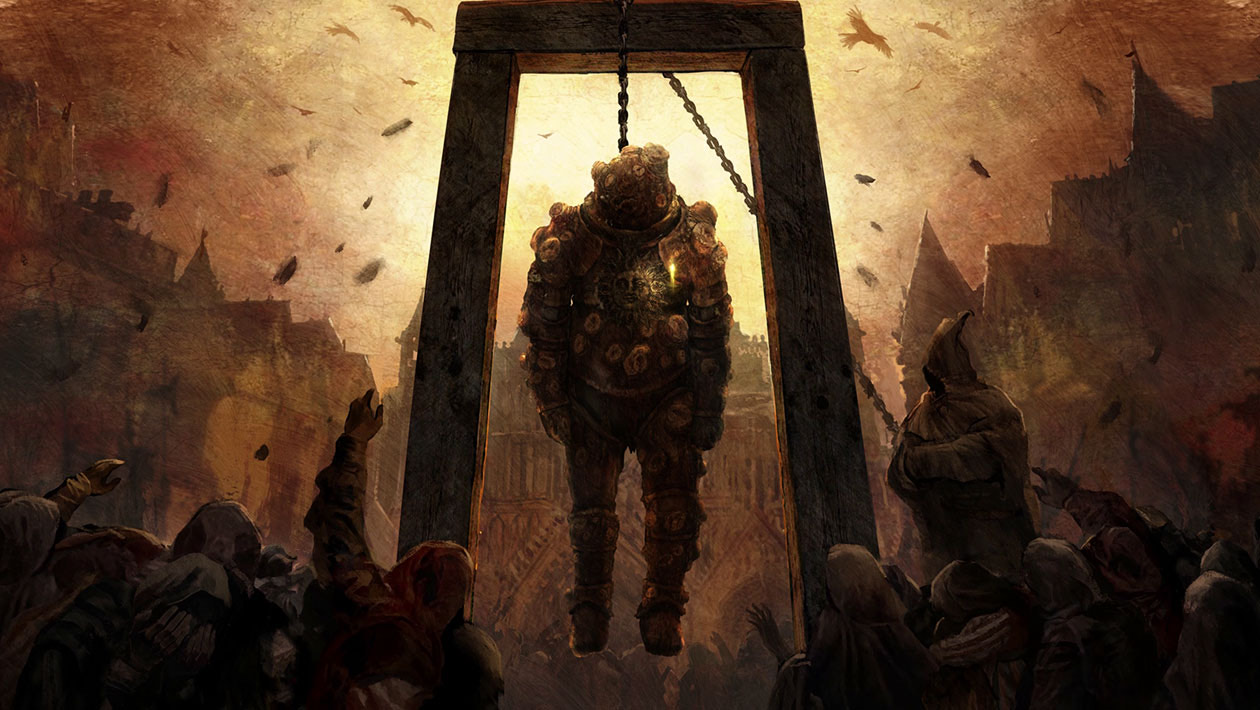
The Dung Eater is one of the named Tarnished called out in the opening narration. In the opening, he is shown hanging from a gallows before a crowd.
What is the “Seedbed Curse”?
This is the heart of every Dung Eater theory.
From the corpses the Dung Eater has killed, a certain curse is found:
Curse grown on a corpse killed and defiled by the Dung Eater. A tender pox afflicted with omen horns. The Dung Eater cultivates the seedbed curse on corpses. By doing so he prevents dead souls returning to the Erdtree, leaving them forever cursed. One of the most loathsome things found in all the Lands Between.
—— Seedbed Curse
He prevents dead souls returning to the Erdtree, leaving them forever cursed.
In the Lands Between, the dead return to the roots of the Erdtree. That is death in the world of the Golden Order. By using corpses as a “seedbed” to grow his curse, the Dung Eater cut off that road home. Not only killing, but locking the dead inside the curse even after death. That is why it is called “one of the most loathsome things found in all the Lands Between.”
And what the curse is made of: “a tender pox afflicted with omen horns.”
“Omen horns” reads as the horns Omens are born with. In the world of the Golden Order, children born with horns are called Omens and cast underground as defiled. Morgott and Mohg were among them. What the Dung Eater was growing in corpses was the curse of the Omen. More on Omens in Who Is Morgott?
Why does he say “I can kill you, and defile your corpse”?
Once the player has a Seedbed Curse, the Dung Eater’s attitude changes:
No, wait. … You have felt the curse. I can smell it on you. The pox, yet tender. Apparently my seedbed is ripe and waiting. Twas a brief respite, I must say. Go, and unshackle my corporeal flesh. Trapped in the sewer gaol, below the capital. I can kill you, and defile your corpse. Then the pox will truly be your own.
—— Dung Eater
Then the pox will truly be your own.
For the Dung Eater, killing and defiling meant giving someone the curse. It is a terrifying way to put it, but in his mind it is the same as bestowing a blessing.
The Dung Eater sitting at the Roundtable Hold was not his true body. His body was imprisoned in a gaol beneath the royal capital Leyndell, in the Subterranean Shunning-Grounds. The Shunning-Grounds are where Omens have been cast away. That he was locked at the very bottom of that “shunning”, we think, means something.
What did the Dung Eater in the gaol want?
When the player approaches his body in the gaol beneath the capital, it screams:
Let me out! Let me out of here! Must eat more! Defile more! Everything that matters to you! For generations to come! I am the Dung Eater! A scourge upon the living!
—— Dung Eater
Let him out, and he says:
I’ve been here long enough. I will kill again. And defile each corpse with care. Just to be sure. That when they’re reborn… They’ll be cursed. Along with their children, and their children’s children, for all time to come…
—— Dung Eater
That when they’re reborn, they’ll be cursed.
Here his goal becomes clear. The Dung Eater does not just want to make someone suffer. He wanted a world where everyone is born cursed.
Why wish for such a thing? Here is what we think. In the world of the Golden Order, only those born cursed have been shunned as defiled. But if everyone is born cursed, no one is “defiled” any more. There is no one left to do the shunning. The Dung Eater’s wish is the most twisted kind of equality, from the side of the shunned.
What does “you are, in fact, me” mean?
Once freed from the gaol, the Dung Eater invades the player’s world. When the player fights him off and returns to the Roundtable Hold, he is waiting:
There you are. You warded off my blessing. Despite the curse stirring within you. No one has succeeded in that before. How? I thought. Then it hit me. That you are, in fact, me. And I…am the Dung Eater. It is my flesh that must receive the blessing.
—— Dung Eater
No one has succeeded in that before. You are, in fact, me.
Killing and defiling, which the Dung Eater calls a “blessing”. No one had ever warded it off. The player, who carries the Seedbed Curse and yet was not killed by him, is like the Dung Eater: someone who carries the curse and survives. That is why “you are, in fact, me.”
And the Dung Eater asks the player to offer the Seedbed Curses to his own body:
Give me your blessing. Defile my flesh with the seedbed curse. Again and again. Until it is done. Until a cursed ring coalesces, that may one day defile Order itself.
—— Dung Eater
Until a cursed ring coalesces, that may one day defile Order itself.
In the end, the Dung Eater means to gather the curse he grew into his own body. And he says:
Hundreds will be reborn cursed, and they’ll bear thousands of cursed children, who’ll bear tens of thousands more. A few of those will be born just like me, and they’ll kill, and defile, and bless in my stead! The rotten fools. My fate was the grandest, most brilliant of them all!
—— Dung Eater
The Tarnished have travelled following the “guidance of grace”. For the Dung Eater, what led him was the curse. A Tarnished who lost grace chose the curse instead, as his own guide. That, we think, is who the Dung Eater is. (In Japanese, this last line says exactly that. See “What the Japanese text says” below.)
What happens when you offer five Seedbed Curses?
When the player offers five Seedbed Curses to the Dung Eater’s body in the gaol beneath the capital, he cries out:
Unleash it upon them! A cursed blessing to all!
—— Dung Eater
And the “Mending Rune of the Fell Curse” takes form in his body:
Loathsome rune gestated by the Dung Eater. Used to restore the fractured Elden Ring when brandished by the Elden Lord. The reviled curse will last eternally, and the world’s children, grandchildren, and every generation hence, will be its pustules. If Order is defiled entirely, defilement is defilement no more, and for every curse, a cursed blessing.
If Order is defiled entirely, defilement is defilement no more. The Dung Eater’s wish becomes, just as it is, a way of mending the Elden Ring. The ending reached with this rune is covered in Elden Ring Endings Explained.
Did the Dung Eater despair at the end?
The Dung Eater has another possible end. Give him Seluvis’s potion, and he is turned into one of Seluvis’s “puppets”:
Ah…argh… No… I am… the Dung Eater… I am…
—— Dung Eater
The Dung Eater Puppet’s description says:
Spirit of a man who murdered thousands and defiled their corpses with the Seedbed Curse. Wields a spine greatsword and hurls curses. The Dung Eater despaired at how he met his end. How hideous and sinister this puppet is, and yet, its utter despair invites one to care for it.
The Dung Eater despaired at how he met his end.
A man who lived taking the curse as his guide ends up as someone else’s puppet. He cried “I am the Dung Eater” because his way of living, at least, was the one thing he did not want taken. And when even that was taken, he despaired. More on Seluvis in Who Is Seluvis?
What the Japanese text says
This site reads the game in the original Japanese. The Dung Eater’s key words line up more tightly there.
- “My fate was the grandest, most brilliant of them all!” The Japanese is 「…ざまあみろ。我が導きは、かくも素晴らしきものであったわ」: serves you right. My guidance was this splendid. The word is 導き, guidance, the same word as 祝福の導き, “the guidance of grace”. In Japanese, the Dung Eater is answering the Tarnished’s guidance with his own. “Fate” loses that echo.
- “No… I am… the Dung Eater… I am…” 「やめろ…、俺は、俺だ…、「糞喰い」だ…/最後まで…」: stop… I am me… the Dung Eater… to the very end… The Japanese says 俺は、俺だ, I am myself, and ends with 最後まで, to the end. He is insisting he will stay himself to the last, as he is made into a puppet.
- “A tender pox.” 「生乾きの宿痾」: a half-dried, chronic affliction. 生乾き is something still damp, not yet dry, like a wound not yet healed or laundry not yet dry. It sounds more unpleasant than tender. 宿痾 is a long-held, incurable illness.
- “You are but a lamb.” 「お前は孺子だ」: you are a mere child. 孺子 is an old, scornful word for a child or a green youth.
- “Its utter despair invites one to care for it.” 「だがその絶望故に、愛でる価値がある」: yet because of that despair, it is worth cherishing. 愛でる is to admire or dote on, as one would a flower. It reads like the voice of a collector, Seluvis, enjoying his puppet.
- “A scourge upon the living!” 「お前たち皆の呪いだ!」: I am the curse of all of you!
What we still do not know
Why the Dung Eater came to call the curse a blessing is not told. Whether he was himself born an Omen, or something else happened, the text says nothing.
When, and by whom, he was caught and imprisoned beneath the capital is not known either. The opening shows him hanging from a gallows, but how that came about is not explained.
And where the name “Dung Eater” comes from remains untold.