 Kousatsu NoteReading the stories of games, films and anime through their own words
Kousatsu Note / Elden Ring / People
 GamesElden Ring People
Who Is Morgott in Elden Ring? Margit's True Identity, and Why an Omen Kept Loving the Erdtree
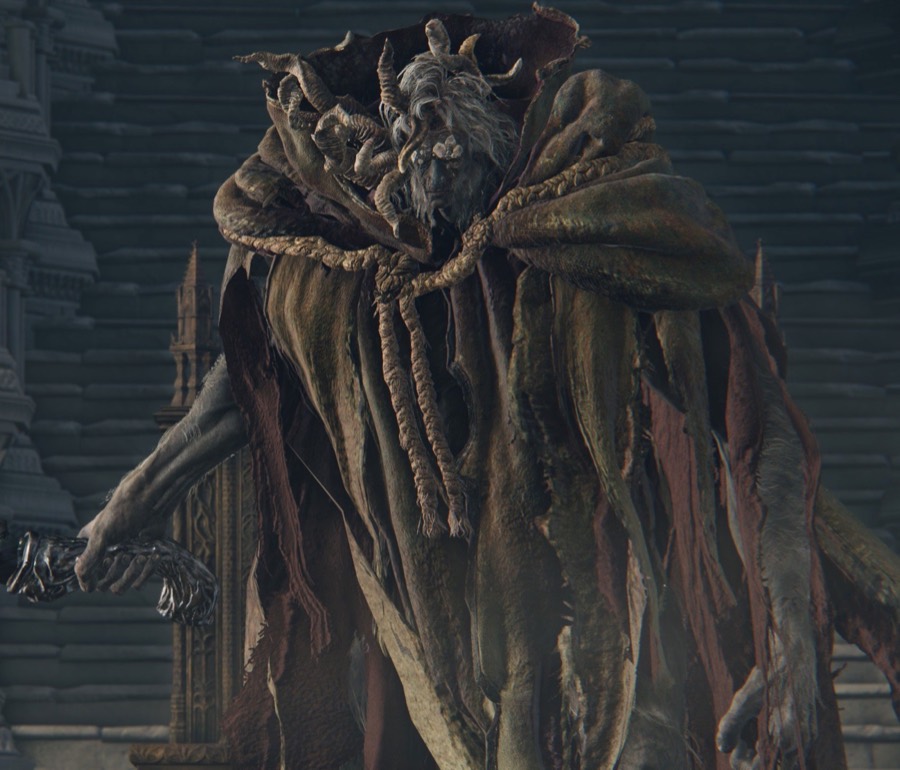
Morgott is the son of Marika and Godfrey, the first lord, and Mohg's twin. Born a horned "Omen", he was imprisoned beneath the royal capital. Even so, Morgott sealed his accursed blood into a sword and defended Leyndell and the Erdtree through the Shattering. Margit, the Fell Omen, early in the game, was one of his guises too. His remembrance says, "He loved not in return, for he was never loved. But nevertheless love it he did." Rejected by the Erdtree, knowing nothing would ever be repaid, he loved it anyway. Morgott, we think, is the child the Golden Order shunned most, who became its last guardian.
Children with the first Elden Lord
… Godrick a distant descendant of the golden lineage
Two who share one body. Children from the age of the second Elden Lord
Children born in Caria, who later became demigods as Marika's stepchildren
Father never named. Children revealed in the DLC
Radagon is the "other self" who shares one body with Marika. Radahn, Rykard and Ranni became Marika's stepchildren as Radagon's children.
Who is Morgott?
He is the lord of Leyndell, the royal capital, a demigod who waits for the protagonist at the throne at the foot of the Erdtree. Gideon of the Roundtable calls him:
Morgott the Grace-Given, Veiled Monarch and Lord of Leyndell.
—— Sir Gideon Ofnir, the All-Knowing
Veiled Monarch. Morgott was a king who ruled the capital without ever showing himself. His Great Rune says:
This Great Rune is the anchor ring that houses the base, and proves two things: That the Omen King was born of the golden lineage and that he was indeed the Lord of Leyndell.
—— Morgott’s Great Rune
Morgott is the son of Marika and Godfrey, the first lord, and the twin of Mohg, Lord of Blood.
What is an “Omen”?
Morgott and Mohg were “Omens”, born with horns. In the world of the Golden Order, horned children were considered cursed. How ordinary Omens were treated is written in the description of a doll:
Doll of a curseborn bairn. Omen babies have all their horns excised, causing most to perish. These fetishes are made to memorialize them. “Please, don’t hate me, or curse me. Please.”
—— Omen Bairn
And for Omens born into the royal family:
Doll of a curseborn bairn from the Erdtree’s royal line. Omen babies born of royalty do not have their horns excised, but instead are kept underground, unbeknownst to anyone, imprisoned for eternity.
—— Regal Omen Bairn
Morgott and Mohg were imprisoned deep beneath the capital, in the Subterranean Shunning-Grounds. Special shackles seem to have been used on Morgott too:
Shackles were used to bind the accursed people called the Omen, and these ones were made to keep a particular Omen under strictest confinement. Though faint, the shackles still retain vestiges of power — enough to trap the once-bound Margit on earth, if only for a short time.
—— Margit’s Shackle
Who is Margit, the Fell Omen, really?
In Limgrave, blocking the road to Stormveil Castle, stands “Margit, the Fell Omen”. He is the first boss many players struggle with:
Foul Tarnished, In search of the Elden Ring. Emboldened by the flame of ambition. Someone must extinguish thy flame. Let it be Margit the Fell!
—— Margit, the Fell Omen
And at the throne in the capital, Morgott greets the protagonist with almost the same words:
Graceless Tarnished. What is thy business with these thrones? Wilful traitors, all. Thy kind are all of a piece. Pillagers. Emboldened by the flame of ambition. Have it writ upon thy meagre grave: Felled by King Morgott! Last of all kings.
—— Morgott, the Omen King
Emboldened by the flame of ambition. Margit and Morgott condemn the Tarnished in the same words. Their looks, weapons and fighting style are nearly identical. Margit’s Shackle calls him “the once-bound Margit”, showing he is an Omen just like Morgott. Margit was Morgott’s guise.
The Fell Omen’s garb, too, says the Omen who hunted countless heroes in the Shattering was the “nightmare” of everyone with ambitions to be lord. The Night’s Cavalry who roam the roads at night were also once led by the Fell Omen, it is said. Morgott guarded the throne in the capital, while in a guise he went out across the Lands Between to hunt those who sought to be lord.
Why did he protect the Erdtree?
This is the heart of every Morgott theory.
His remembrance says:
Though born one of the graceless Omen, Morgott took it upon himself to become the Erdtree’s protector. He loved not in return, for he was never loved. But nevertheless love it he did.
—— Remembrance of the Omen King
He loved not in return, for he was never loved. But nevertheless love it he did.
The Golden Order did not love Morgott. Just for being born with horns, it cast him underground and imprisoned him. Hating it would be only natural. Indeed, his twin Mohg, deep underground, “was besotted with the defilement that he was born into”, and chose a path apart from the Erdtree. More on Mohg in Who Is Mohg?
But Morgott went on loving the Erdtree that cast him away, asking nothing in return. Even sealing his accursed blood inside a sword:
Warped blade of shifting hue used by Morgott, the Omen King. The accursed blood that Morgott recanted and sealed away reformed into this blade.
—— Morgott’s Cursed Sword
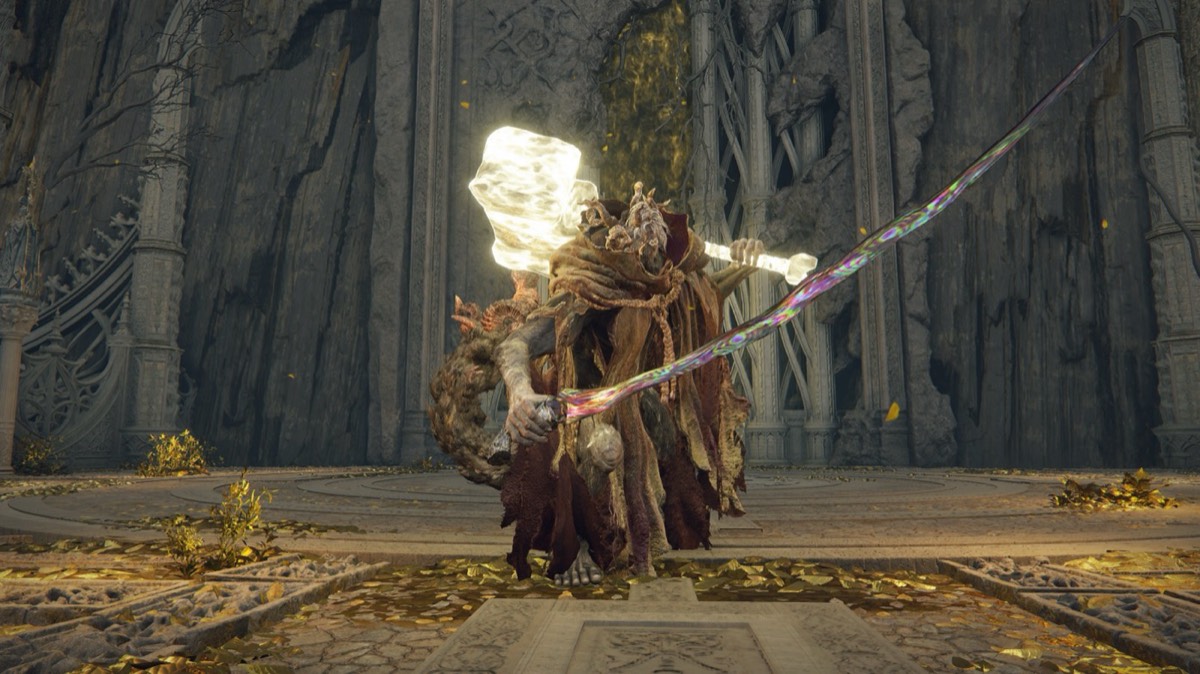
An accursed birth: Mohg embraced it, Morgott sealed it away. The same twins chose opposite roads.
What happens in the middle of the fight?
When the protagonist pushes him back, Morgott uses the curse he had sealed away. His words then:
The thrones…stained by my curse… Such shame I cannot bear. Thy part in this shall not be forgiven.
—— Morgott, the Omen King
Such shame I cannot bear. To use his accursed blood before the Erdtree’s throne was, for Morgott, the greatest shame. Being forced to use the curse he had kept sealed all this time is what becomes “Thy part in this shall not be forgiven.”
What are Morgott’s last words?
Defeated, Morgott leaves these words:
Tarnished, thou’rt but a fool. The Erdtree wards off all who deign approach. We are…we are all forsaken. None may claim the title of Elden Lord. Thy deeds shall be met with failure, just as I.
—— Morgott, the Omen King
Thy deeds shall be met with failure, just as I.
Morgott guarded the capital, held a Great Rune, and truly was “the Lord of Leyndell”. Even so, the Erdtree did not accept him as Elden Lord. The way into the Erdtree was closed by thorns of rejection.
Morgott knew he would never be repaid. And still he kept guarding the throne. The remembrance’s “nevertheless love it he did” overlaps with these last words.
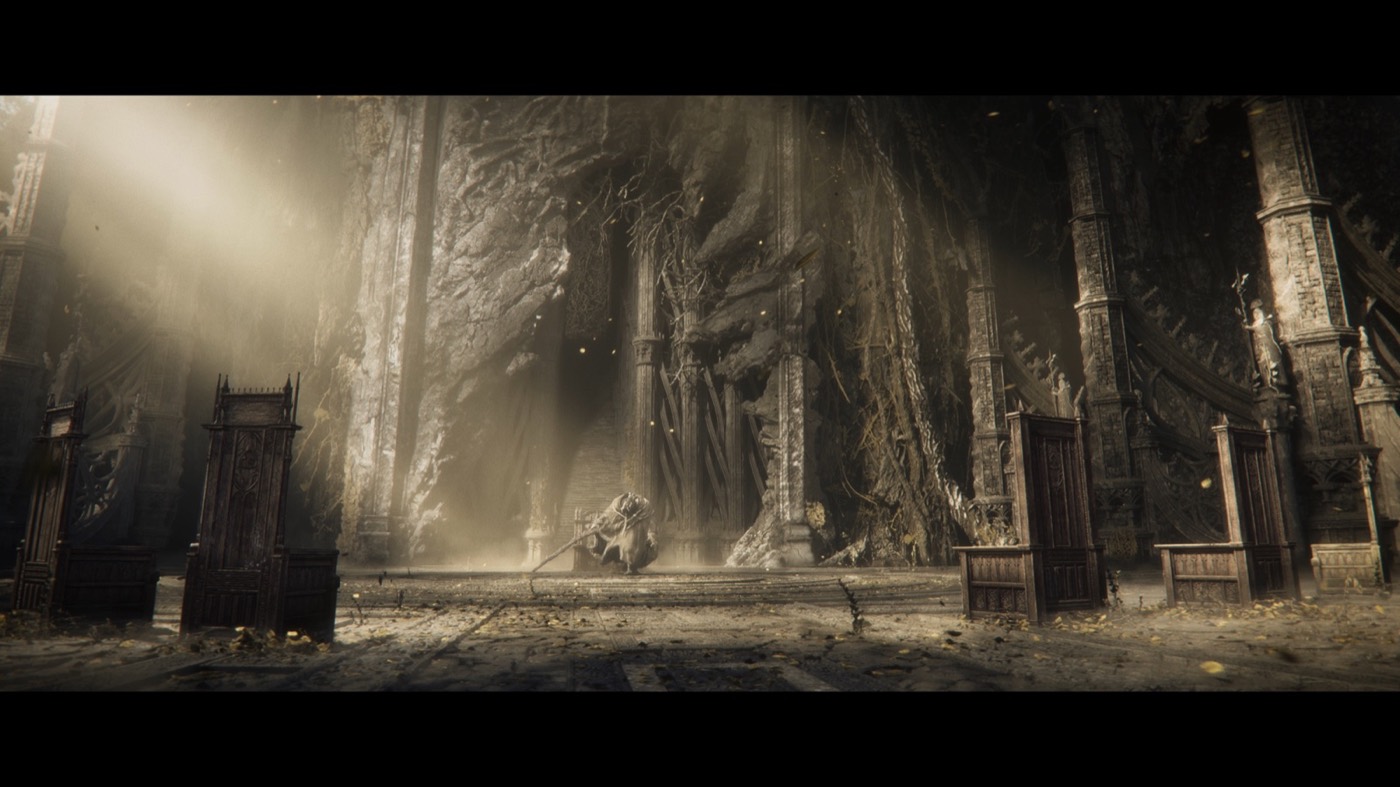
Later, in the same place after the Erdtree has burned, his father Godfrey holds Morgott’s body and says, “It’s been a long while, Morgott. Long and hard didst thou fight.” The Omen whom no one was supposed to love was, at the last, recognized by his father. More in Who Is Godfrey?
What the Japanese text says
This site reads the game in the original Japanese. The most famous line about Morgott reads a little differently there.
- “He loved not in return, for he was never loved.” The Japanese is 「愛されたから、愛したのではない/彼はただ愛したのだ」: he did not love because he was loved. He simply loved. The English says he did not love in return, since he was never loved, and then loved anyway. The Japanese makes a cleaner point: his love was never a response to anything. It was not “in spite of” being unloved; it was simply love, with no conditions at all.
- His last words. The Japanese ends with 「…もう誰も、エルデの王にはなれぬのだ…/…私と、同じようにな…」: no one can become Elden Lord any more… just like me. The English “Thy deeds shall be met with failure” talks about your deeds; the Japanese talks about what you cannot become. Morgott, the king of Leyndell, admits he too never became Elden Lord.
- “Graceless Tarnished.” 「祝福なき褪せ人よ」: Tarnished without grace. The same word, 祝福なき (“without grace”), appears in his remembrance for Morgott himself: 祝福なき忌み子, a graceless Omen. In Japanese, he condemns the Tarnished with the very word that describes his own birth.
- “Such shame I cannot bear.” 「…王の座を、呪いで穢すなど…/…耐えがたい恥よ…」: to defile the throne with a curse… an unbearable shame. 穢す is ritual defilement, the word for what Omens were said to be.
What we still do not know
When and how Morgott escaped his underground confinement and became master of the capital is never told.
Whether Margit and Morgott are truly the same one person, or something like a double, is not clearly written either. Margit appears in both Limgrave and the Altus Plateau, so it may be more than a disguise.
And why are Omens born with horns? Why were horns considered a curse under the Golden Order? A Crucible talisman says that remnants of the Crucible appearing on the body were once held sacred, but came to be treated as defilement once civilization arose. There is a big hint here.