 Kousatsu NoteReading the stories of games, films and anime through their own words
Kousatsu Note / Elden Ring / People
 GamesElden Ring People
What Was Miquella's Goal in Elden Ring? The New God, Radahn and the Charm, Explained
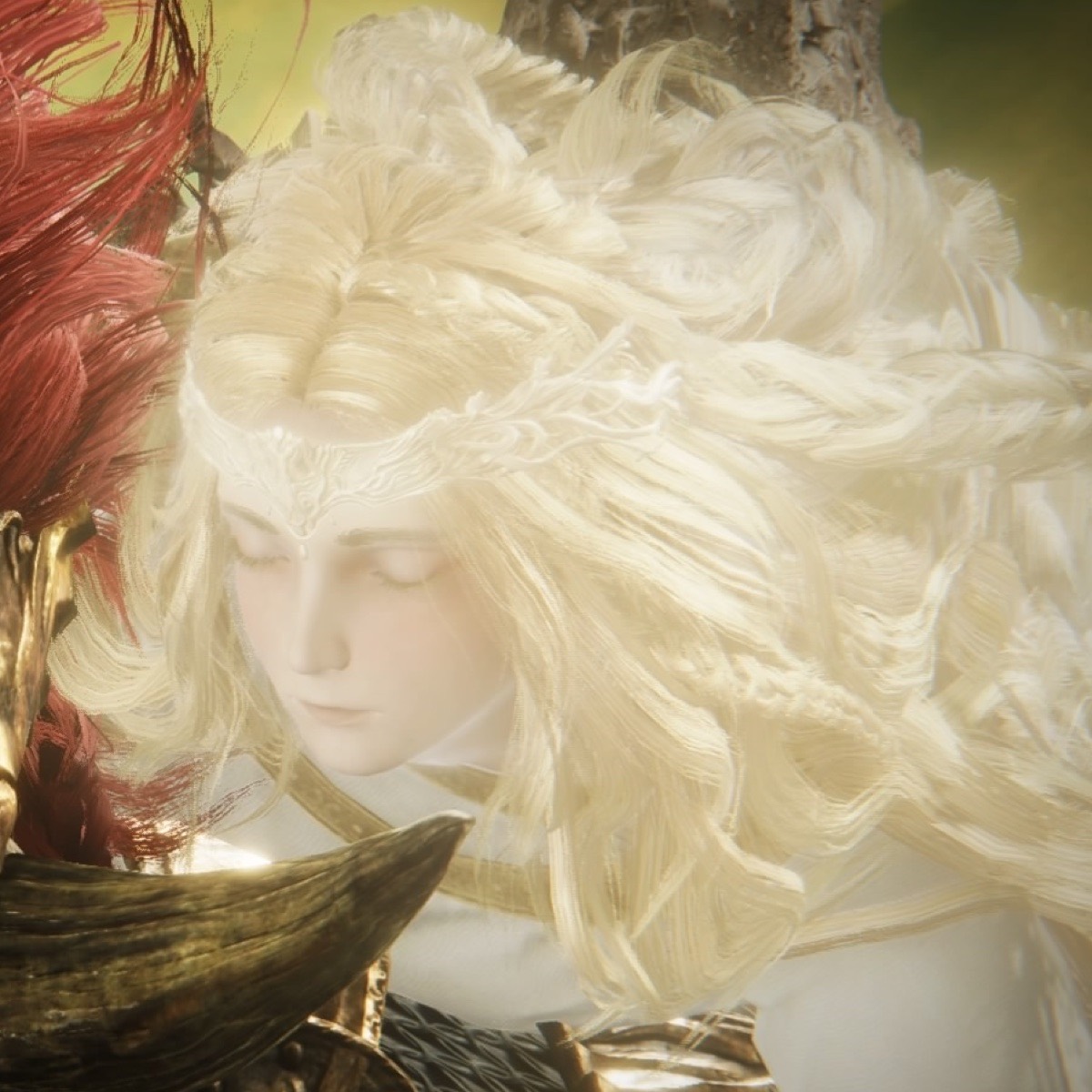
Miquella's goal was to become a new god who would embrace everything, and to take Radahn as his consort. The text states this outright. His motive was kindness, but his method was charm, a power that turns others' hearts toward him without asking. The popular idea that Miquella was behind the Night of the Black Knives has no text to support it and remains a theory. And one of his incantations reads very differently in the original Japanese, which changes how his relationship with Radahn looks.
Who is Miquella?
Miquella is one of the twins born to Marika and Radagon. The other is Malenia, who came close to becoming the Goddess of Rot.
In the base game, Miquella sleeps in a cocoon deep in the Haligtree, and Mohg has stolen him away. He barely appears and barely speaks, yet his name comes up everywhere.
The DLC, Shadow of the Erdtree, is the story of following Miquella into the Realm of Shadow. By the end, what he was trying to do becomes clear.
What did Miquella want to become?
The answer is written on Miquella’s Great Rune, found in the DLC:
A Great Rune relinquished by Miquella. Broken and bereft of its bounty, it retains naught but the power to resist charms. Miquella set off for the tower enshrouded by shadow, abandoning everything—his golden flesh, his blinding strength, even his fate. All in an effort to bury the original sin. To embrace the whole of it, and be reborn as a new god.
—— Miquella’s Great Rune
To embrace the whole of it, and be reborn as a new god. That is Miquella’s goal, and it is stated in the text, not inferred.
How far “the whole of it” reaches is where readings split. Many take it to mean those left outside the Golden Order: Omens, those touched by rot, even the children of the Night’s order.
Miquella himself, though born a child of the Golden Order’s god, was cursed to remain a child forever. His twin, Malenia, carried the rot inside her body from birth. He had watched, up close, the suffering of those the Golden Order does not save.
Why did he choose Radahn?
The Remembrance you receive after defeating Promised Consort Radahn gives the reason:
In their childhood, Miquella saw in Radahn a lord. His strength, and his kindness, that stood in stark contrast with their afflicted selves. And so Miquella made his heartfelt wish. That Radahn would one day be his king consort.
“Their afflicted selves” most likely means Miquella and Malenia. To the frail twins, Radahn was strong, and kind besides. So Miquella wished for him to be his lord. The reason is simple and sincere.
The Japanese word behind “heartfelt” is 純真に, “innocently, with a pure heart”. That word is the one that stays with us. A wish with no malice in it is also a wish that never stops to ask what the other person wants.
Why is the kindest Empyrean “the most fearsome”?
Even in the base game, Miquella is described as someone to fear. From Malenia’s armor:
“My brother will keep his promise. He possesses the wisdom, the allure, of a god - he is the most fearsome Empyrean of all.”
—— Malenia’s Armor
The DLC shows what that “allure” is: charm. Miquella could turn the heart of anyone he met toward himself. Most of the followers who trailed him through the Realm of Shadow seem to have been made his followers this way. The Great Rune he left behind still holds a trace of it: “it retains naught but the power to resist charms.” Many players used it to shake off his charm in the final battle.
This is what makes Miquella frightening. The world he wants is a kind one, where no one is abandoned. But the means he uses to reach it is a power that does not let others choose whether to love him. Even with Radahn, we cannot tell how much was Radahn’s own wish.
The incantation that reads differently in Japanese
One of Miquella’s incantations has a line worth a careful look:
The strength of Miquella upon his deific return, wielded as an incantation. Annihilates foes with a pillar of light. Miquella sought to accept all that was and would be, but found one that refused to be embraced. No wonder, as one god and one king consort, is all the world needs.
In English, the last line reads almost like a love letter: one god and one consort are all the world needs. The original Japanese says something close to the opposite.
What the Japanese text says
This site reads the game in the original Japanese. For Miquella, the differences matter.
- Light of Miquella. The Japanese reads 「ミケラは、全てを受け容れ、抱こうと望み/だがひとつだけ、そうできぬものを知っていた/絶対の神も、その王も/決して並び立つことはない」. In plain English: Miquella wished to accept and embrace all, but he knew of one thing he could not. An absolute god and its king can never stand side by side. Where the English says the world needs one god and one consort, the Japanese says a god and a king can never be equals. Read this way, the “one that refused to be embraced” is not a stranger at all. It is the very relationship he wanted with Radahn.
- Miquella’s Great Rune. “To bury the original sin” is, in Japanese, 「はじまりから続く因果を超えて」: to go beyond the chain of cause and effect that has run since the beginning. The English points backward, to a sin to be buried. The Japanese points forward, to breaking free of fate itself, which fits the list right before it: he abandoned “even his fate”.
- Remembrance of a God and a Lord. “That Radahn would one day be his king consort” is, in Japanese, a direct plea: 「私の王に、なってください」, please, become my lord. The Japanese keeps the child’s voice.
- Golden Epitaph. “O brother, lord brother, please die a true death” is 「兄様、兄様、正しく死んで下さいな」. 正しく means “rightly, properly”: a prayer that Godwyn might die the way the dead are meant to.
Taken together, the Japanese Miquella is a little sadder than the English one. He knew from the start that the god he would become could never stand beside the king he chose.
Was he working for Malenia?
Half true. Miquella was crafting needles to hold back Malenia’s rot. One appears in Millicent’s questline:
An intricately crafted needle of unalloyed gold, snapped in half. A ritual implement crafted to ward away the meddling of outer gods, it is thought capable of forestalling the incurable rotting sickness.
But the needle was never finished. In the base game, Malenia waits for her brother at the foot of the Haligtree. In the DLC, Miquella has left the Haligtree behind and is pursuing his own plan in the Realm of Shadow.
His wish to save his sister was real, we think. In the end, though, what he put first was his plan to become a god.
Was Miquella behind the Night of the Black Knives?
This theory spread fast after the DLC. The outline: Miquella used his charm to move the Black Knife Assassins and have Godwyn killed, either to clear the way for Radahn or to obtain a body that could serve as a vessel for a lord.
Since charm is real in this world, it is not impossible. But one item makes it hard to read straight. The sword that mourns Godwyn:
A sword made to commemorate the death of Godwyn the Golden, first of the demigods to die. Infused with the humble prayer of a young boy; “O brother, lord brother, please die a true death.”
The young boy calling Godwyn “brother” is most naturally Miquella, Godwyn’s younger brother. Miquella was praying that Godwyn, whose soul died while his body lived on, might at last die properly.
Would the one who ordered his death pray like this? It is possible, but it does not read naturally. It reads more like someone trying to save a brother who cannot die.
We found no text, including the DLC, that ties Miquella to the Night of the Black Knives. So our view is that the mastermind theory is interesting, but it is still only a theory.
What we still do not know
What kind of world Miquella meant to make as a god is never written. What “embracing the whole of it” would actually do, we can only imagine.
Whether Radahn truly wanted to be his consort is also unknown. Was he charmed, or was it his own will? The game seems built to allow both readings.
What we can say is that Miquella did not act out of malice. He began from kindness, and for the sake of kindness he moved other people’s hearts. That is where both the fear and the sadness of this character come from.