 Kousatsu NoteReading the stories of games, films and anime through their own words
Kousatsu Note / Elden Ring / People
 GamesElden Ring People
Who Is Rykard in Elden Ring? Why He Fed Himself to the Serpent, What "Blasphemy" Means, and Tanith's Last Act
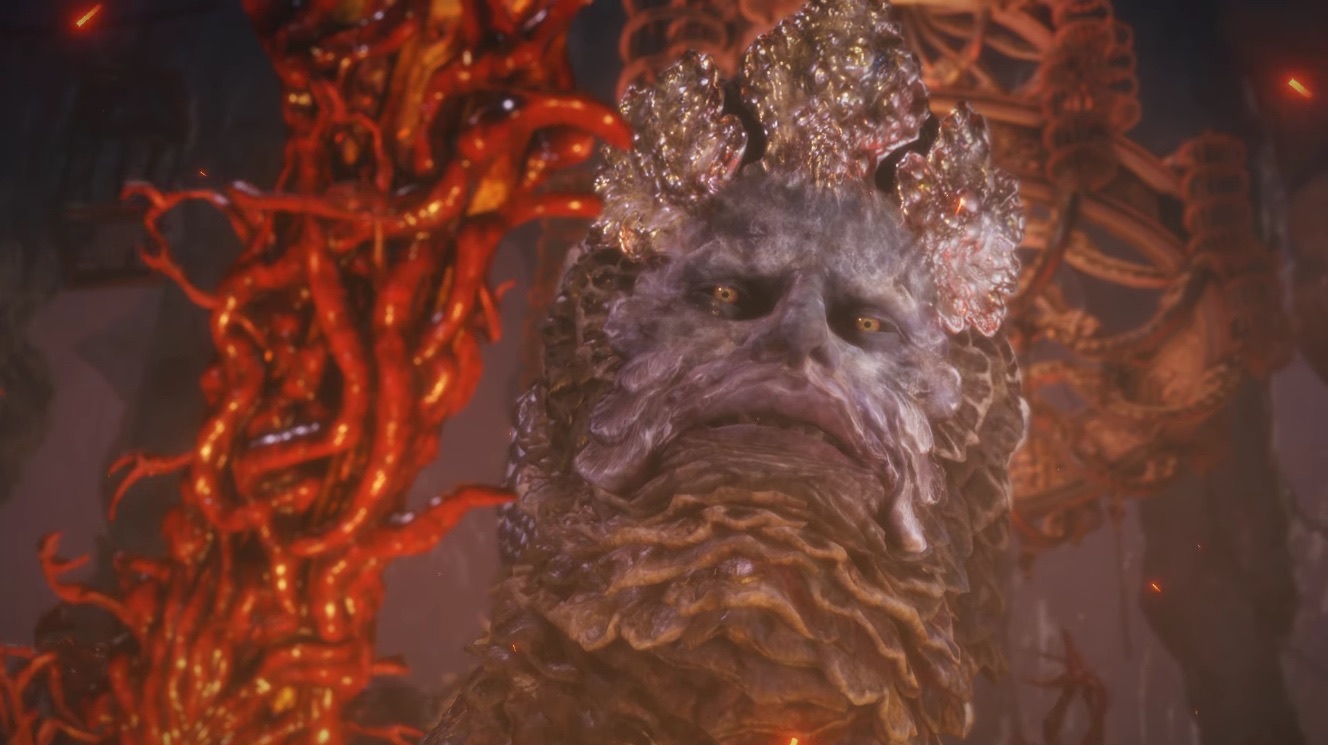
Rykard is the son of Rennala and Radagon, the sibling of Ranni and Radahn. He was once a praetor who judged heretics under the Golden Order, but in the Shattering he refused to live by scavenging for "miserly scraps", the Great Runes handed out to them, and raised the banner of resistance against the Erdtree and the gods. To gain that power, he fed himself and his Great Rune to the great serpent of Mt. Gelmir, so that he might "devour, grow, and live eternally". Rykard's blasphemy, we think, was a road to stand beside the gods not by being given anything, but by devouring even the gods. Yet his aspiration fell into greed, and his men left him. The only one who stayed to the end was his consort, Tanith.
Who is Rykard?
He is the true master of the Volcano Manor, on Mt. Gelmir west of the Altus Plateau. His Great Rune tells of his birth:
Rykard was amongst the children of Rennala and Radagon who became demigod stepchildren after Radagon’s union with Queen Marika. But Rykard fed himself to the blasphemous serpent, Great Rune and all.
—— Rykard’s Great Rune
He is the sibling of Ranni and Radahn, and in the age of the Golden Order he served as a “praetor”, charged with judging heretics.
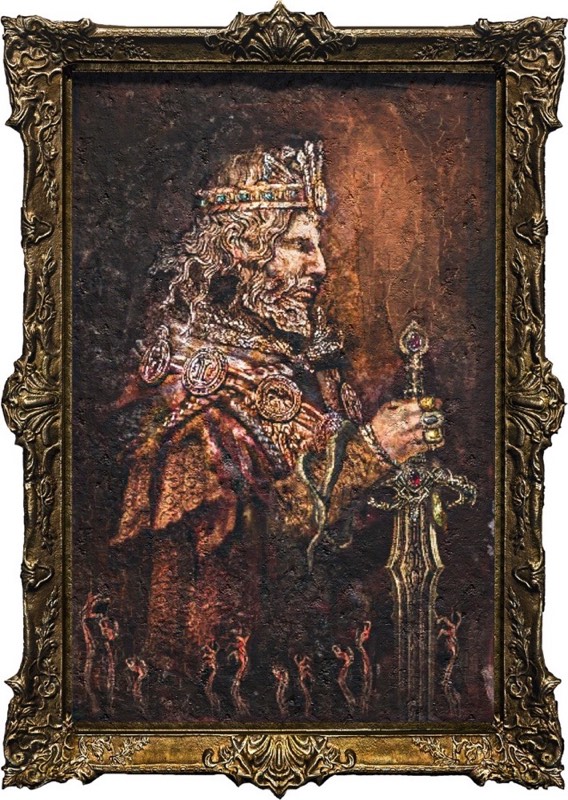
The Rykard the protagonist meets is no longer human. He is the “Lord of Blasphemy”, fused with a gigantic serpent.
Why did he turn against the Erdtree?
Tanith, proprietress of the Volcano Manor, tells you of Rykard’s resolve:
The Erdtree blessed the Tarnished with grace. But it was all too meagre, in the face of the enormity of their task. The Tarnished were forced to scavenge, squabbling for crumbs. Like the shardbearers, vying for power in the wake of the Shattering. Our Lord, indignant, has refused. To scurry about, fighting over what miserly scraps they allow us. If the Erdtree, and indeed the very gods, would debase us so, then we are willing to raise the banner of resistance, even if it means heresy.
—— Tanith, Volcano Manor Proprietress
To scurry about, fighting over what miserly scraps they allow us.
After the Elden Ring was shattered, the demigods fought over its shards, the Great Runes. Rykard felt they were being made to scavenge by the gods. The gods scattered fragments of power, and their children fought to pick them up. The system itself was an insult to them.
So Rykard decided to obey neither the Erdtree nor the gods, and raise the banner of resistance. That is his “blasphemy”.
Why did he let the serpent devour him?
This is the heart of every Rykard theory.
His remembrance gives the reason plainly:
Rykard took the form of a giant serpent that he might devour, grow, and live eternally. “I understand. The road of blasphemy is long and perilous. Once cannot walk it unprepared to sin.”
—— Remembrance of the Blasphemous
That he might devour, grow, and live eternally. To challenge the gods, power given by the gods would not be enough. So Rykard fed himself and his Great Rune whole to the great serpent that had long lived in Mt. Gelmir. By being devoured, he became one with the serpent.
And having become the serpent, Rykard grows stronger by devouring:
Sacred sword of Rykard, Lord of Blasphemy. Remains of the countless heroes he has devoured writhe upon the surface of this blade. Now they share the same blood, bound together as family.
—— Blasphemous Blade
These spirits manifest from the rancor of heroes who met a violent end. The lord granted them an audience, whereupon they were welcomed by the maw of the great serpent — and within the serpent’s bowels, they became the lord’s kin.
—— Rykard’s Rancor
This is why the Volcano Manor gathered Tarnished. Find a Tarnished worthy of being a champion, have them “granted an audience” with the lord, feed them to him, and make them “family” inside the serpent.
The vision Rykard saw just as he was being devoured has been preserved too:
Scepter in the shape of a serpent devouring the world. This weapon will one day become the very symbol of the Lord of Blasphemy. One of the legendary armaments. A vision of the future briefly seen by Rykard in his final moments before being devoured by the great serpent.
—— Devourer’s Scepter
A serpent devouring the world. What Rykard aimed for was not to be given something by the gods, but to devour the gods, the world itself. His words when he fights the protagonist say exactly that:
Very well. You… Join the Serpent King, as family… Together, we will devour the very gods!
—— Rykard, Lord of Blasphemy
What became of his aspiration?
The aspiration of Rykard the serpent changed over time. The armor of the knights who served the praetor says:
Armor worn by knights once loyal to Praetor Rykard. It bears an emblem that none wear any longer, standing as it does for a lord that fell from lofty ambition into gluttonous depravity. As the lord lost his dignity, so too did these knights lose their master.
—— Gelmir Knight Armor
When their master’s heroic aspirations degenerated into mere greed, his men searched for a weapon with which they might halt their lord.
The aspiration to devour the gods became simply devouring. His men left him, and sought out a spear to stop him, the “Serpent-Hunter”. That spear lies just before the place where you fight Rykard.
A spirit on the road to the Volcano Manor laments:
Lord Rykard… If this putrid field of death is what your blasphemy would bring, then I can no longer abide. No one can.
—— Spirit on the road to the Volcano Manor
Rykard’s blasphemy once drew many to him. But in the end, almost no one remained.
Why did only Tanith stay?
One person alone stayed with Rykard to the end: his consort, Tanith.
Mask worn by Tanith, Lady of the Volcano Manor, in the image of a foreign queen. Long ago, when Rykard first set eyes on Tanith, she was working as a dancer in a foreign land. Soon, he made her his consort. She was the only human to remain by his side when he became the serpent of blasphemy. In that moment, Tanith was truly charmed by him.
—— Consort’s Mask
In that moment, Tanith was truly charmed by him. Not when the praetor first chose her, but when he became the serpent. When Rykard cast everything aside for the road of blasphemy, Tanith’s heart was truly taken.
Rykard had given Tanith a tonic that would let her forget everything painful. But Tanith never used it:
A gift bestowed by Rykard, sworn to blasphemy, to Lady Tanith, who unfortunately had no use for it. “My Lord, there could be no greater distress than to forget you.”
That tonic would later go to Tanith’s daughter, Zorayas. More in Who Is Rya?
Why does Tanith eat his remains at the end?
Defeated by the protagonist, Rykard leaves these last words:
No one will hold me captive. A serpent never dies.
—— Rykard, Lord of Blasphemy
No one will hold me captive. Not to be bound by Order. That was the core of Rykard’s blasphemy.
After Rykard falls, Tanith tells the protagonist:
No, I must thank you. Our Lord was yet weak. You have taught us that. Defeat is not the end. Our Lord is immortal, and will one day rise again, stronger. Until then, I must stay the path, and do my part.
—— Tanith, Volcano Manor Proprietress
And when you visit the chamber where Rykard was, Tanith is eating his enormous remains:
Allow me some time. Our Lord’s carcass is vast, and not easily consumed. Dear Rykard, please find purchase within me, I wish to be your serpent; your family. One day, let us devour the gods together.
—— Tanith, Volcano Manor Proprietress
I wish to be your serpent; your family.
Rykard became one with the serpent by being devoured, and the champions became “family” by being devoured. Tanith is trying to do the same with Rykard: to become one by devouring, and to carry Rykard within herself. It is the way Tanith, who could never become family inside the serpent, finally chose to become family. A horrifying scene, but within the logic of the Volcano Manor, we think, there is no greater form of love.
What the Japanese text says
This site reads the game in the original Japanese. Rykard’s key words are more precise there.
- “No one will hold me captive.” Rykard’s dying words are 「…何者も、我を律せられぬ」: no one can bind me with Order. 律する is the verb form of 律 (“Order”), the same word as in 黄金律, the Golden Order. In Japanese, his last words are a direct rejection of Order itself, not just of captivity.
- “Even if it means heresy.” Tanith’s Japanese is 「背律の冒涜を犯してでも、尊厳の反旗を翻す」: even if we commit the blasphemy of defying Order, we will raise the banner of dignity in rebellion. 背律 means “turning one’s back on Order”. And the banner is one of 尊厳, dignity. The English “banner of resistance” loses that it was a rebellion for dignity.
- “Fell from lofty ambition into gluttonous depravity.” The Serpent-Hunter’s Japanese is 「覇王の雄心が、下卑きった貪欲に堕した時」: when the bold heart of a conqueror sank into utterly base greed. 覇王 is a conquering overlord, a title of real grandeur, which makes the fall steeper.
What we still do not know
What the great serpent of Mt. Gelmir originally was is not clear. That Mt. Gelmir had an old faith that worshipped a serpent as a god can be glimpsed from items like the Serpent-God’s Curved Sword.
We know Rykard received the Blasphemous Claw from Ranni on the Night of the Black Knives, but what he did that night is not written. More in What Really Happened on the Night of the Black Knives?
And can Tanith’s “will one day rise again, stronger” truly happen? Whether a serpent never dies, as he says, the game does not tell.