 Kousatsu NoteReading the stories of games, films and anime through their own words
Kousatsu Note / Elden Ring / World & gods
 GamesElden Ring World & gods
What Is the Crucible in Elden Ring? The Crucible Knights, and Why Omen Horns Were Called Impure
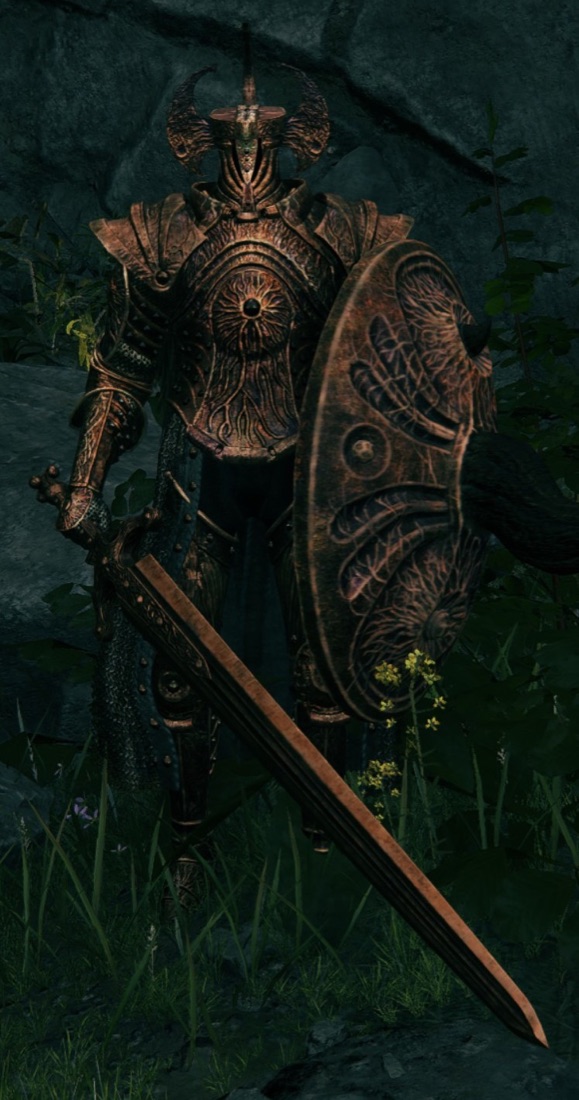
The "crucible" is the primordial power of the Erdtree's earliest days, when all life was blended together. The Crucible Knights served Godfrey, the first lord, and fought clad in that ancient power. Incantations that hold the crucible's power make horns, tails and wings sprout from the body. And according to the talismans, "vestiges of the crucible" that appear on the human body, like horns or scales, were considered divine in ancient times, but came to be disdained as impure as civilization advanced. We think horn-born "Omens" were treated as cursed because the Golden Order, as "civilization", came to call those once-sacred vestiges of the crucible impure.
- I The age of the Realm of Shadow Marika lives in the shaman village. The shamans are taken by the Hornsent
- II Marika becomes a god Chosen by the Greater Will, she takes the Elden Ring into herself
- III The Golden Order begins Destined Death is removed, and Maliketh seals it away
- IV The crusade, and the Realm of Shadow sealed Messmer burns the Hornsent, and the Realm of Shadow is hidden
- V The age of Godfrey The war against the giants. The flame of ruin is sealed
- VI The Tarnished exiled Godfrey and his warriors are stripped of grace and leave the Lands Between
- VII The age of Radagon Peace with Caria. Radagon becomes the second Elden Lord
- VIII The Night of the Black Knives Godwyn dies in soul alone, Ranni in body alone
- IX The Shattering of the Elden Ring Marika shatters the Ring and is imprisoned in the Erdtree
- X The Shattering war The demigods fight over the Great Runes. The scarlet flower blooms in Aeonia
- XI The Tarnished return Grace returns, and a Tarnished of no renown reaches the Lands Between
What kind of enemy are the Crucible Knights?
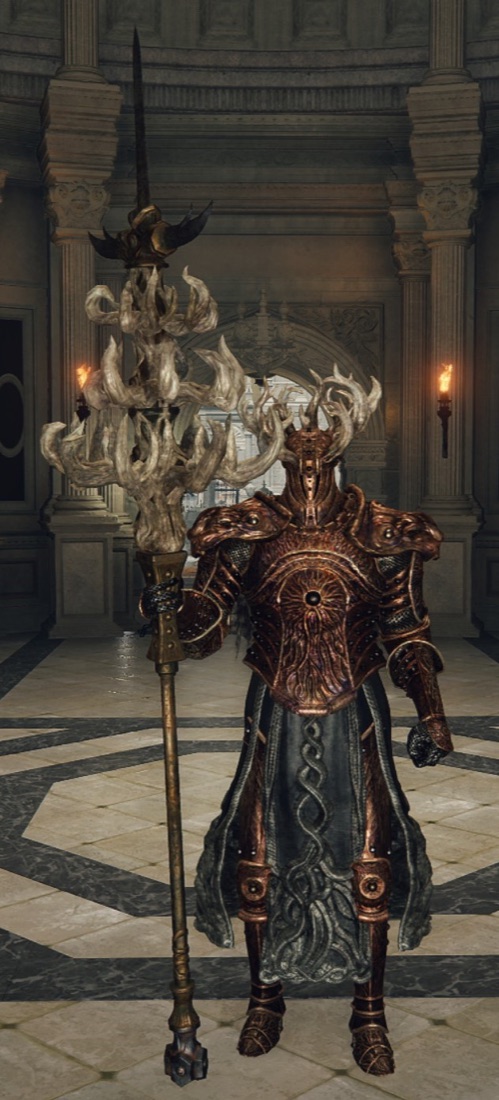
They are knights in heavy coppery armor and horned helms. They appear early on as tough foes, and midway through a fight they sprout wings from their backs or horns from their shoulders.
Their armor’s description:
Armor of the Crucible Knights who served Godfrey, the first Elden Lord. Worn by the knight Ordovis and his men. Holds the power of the crucible of life, the primordial form of the Erdtree. Strengthens Aspects of the Crucible incantations.
—— Crucible Axe Armor
The Crucible Knights who served Godfrey, the first Elden Lord. They were knights from the very earliest age of the Erdtree, who served Godfrey, the first Elden Lord. Ordovis, of the axe ornament, and Siluria, of the tree ornament, were foremost among them. More on Godfrey in Who Is Godfrey?
What is the “crucible”?
This is the heart of every crucible theory.
The description of the Crucible Knights’ incantation “Aspects of the Crucible” gives the answer:
One of the ancient Erdtree incantations. Creates a mighty horn on the caster’s shoulder to gore foes from a low stance. Charging allows the caster to barrel into foes before delivering the final attack. This is a manifestation of the Erdtree’s primal vital energies—an aspect of the primordial crucible, where all life was once blended together.
—— Aspects of the Crucible: Horns
Where all life was once blended together.
A “crucible” is a vessel for melting and mixing metals. In the Erdtree’s earliest days, life was not divided one from another; horns, tails, wings and scales were all blended together. That chaotic power of life is the “crucible”. The Crucible Knights carry that primordial power in their bodies, and fight sprouting horns and tails.
The greatsword of the knight Ordovis says:
Greatsword of Ordovis, one of the two honored as foremost among the Crucible Knights. This sword is imbued with an ancient holy essence. Its red tint exemplifies the nature of primordial gold, said to be closer in nature to life itself.
—— Ordovis’s Greatsword
Primordial gold, said to be closer in nature to life itself. The Crucible Knights’ armor is coppery rather than gold because it is the gold of an older age, when the Erdtree was still close to life itself.
Why were horned Omens treated as impure?
The crucible talismans say something very important:
A talisman fashioned from a bony knot that embodies the aspects of various creatures. Said to have grown on the human body long ago. A vestige of the crucible of primordial life. Born partially of devolution, it was considered a signifier of the divine in ancient times, but is now increasingly disdained as an impurity as civilization has advanced.
—— Crucible Knot Talisman
The same line appears on the scale talisman too.
Considered a signifier of the divine in ancient times, but now increasingly disdained as an impurity as civilization has advanced.
Horns, scales or feathers can appear on the human body. These were vestiges of the crucible, a throwback to the age when life was blended together. In ancient times they were held sacred. But as civilization advanced, they came to be treated as impure.
Recall the “Omens”, born with horns:
Doll of a curseborn bairn. Omen babies have all their horns excised, causing most to perish. These fetishes are made to memorialize them.
—— Omen Bairn
In the world of the Golden Order, children born with horns were called “Omens”; their horns were cut off, and if born royal, they were cast underground. But read with the crucible talismans, those horns were originally sacred vestiges of the crucible.
For us, Omens were treated as cursed because the Golden Order, as “civilization”, came to call the vestiges of the crucible impure. The Golden Order is an Order that divides blended life one from another and gives it order. Horns, as remnants of that blending, fell outside the Order and were called impure.
Perhaps Morgott and Mohg, children of Marika and Godfrey, were born with horns because the golden lineage itself was born in an age still close to the crucible. More on Morgott in Who Is Morgott?, and on Mohg in Who Is Mohg?
Do the Godskin Nobles resemble the crucible too?
The crucible appears in the garb of the “Nobles”, the most ancient of the Godskin Apostles:
Nobles are the most ancient apostles who are said to have assimilated inhuman physiology. Not unlike the crucible, the Erdtree in its primordial form.
—— Godskin Noble set
The primordial power of the Erdtree remained not only in the Crucible Knights who served the Golden Order, but also in the Godskin Apostles who were defeated by it. The crucible, we think, was an old form of life from before the Golden Order, belonging to neither side. More in Who Are the Godskin Apostles?
How did the DLC portray the crucible?
A crucible incantation obtained in Shadow of the Erdtree says:
Aspect of the Crucible that manifested in golden hippopotami. In an age long past, before this land was enshrouded in shadow, the vitality of the Crucible flourished. Remains of this can be seen in the ancient ruins.
—— Aspects of the Crucible: Thorns
Before this land was enshrouded in shadow, the vitality of the Crucible flourished. The Realm of Shadow is the land Queen Marika hid. Crucible life once flourished there. And the Realm of Shadow was home to a horned people: the Hornsent.
A talisman found in the Realm of Shadow ties the Hornsent and the crucible together plainly:
A talisman fashioned from thin feathers that embody the aspects of various creatures. Said to have grown on the human body long ago. Hornsent view the Crucible as sacred for the refinement wrought through its evolutionary gifts. Most prominently, their tangled horns.
—— Fine Crucible Feather Talisman
Hornsent view the Crucible as sacred. The vestiges of the crucible that the Lands Between called impure, the Hornsent of the Realm of Shadow still held sacred. Their horns were the refined result of the crucible’s gifts.
A people who held horns sacred, and a Golden Order that called them impure. Marika hiding the Realm of Shadow, and horns being called impure in the world of the Golden Order, may be connected somewhere. More in Who Is Queen Marika?
What the Japanese text says
This site reads the game in the original Japanese. One word in the talismans changes their tone.
- “Born partially of devolution.” The Japanese is 「部分的な先祖返りであり」: it is a partial atavism. 先祖返り means a return to the ancestors, a trait that skips back to an older form. It is neutral, even respectful. The English “devolution” suggests decline, degeneration, which already carries the judgement the text goes on to describe. In Japanese, the horn is simply a reversion to the oldest form of life.
- “Is now increasingly disdained as an impurity as civilization has advanced.” The Japanese is 「古くは神聖視されたが/文明の後には穢れとして扱われた」: in ancient times it was held sacred, but after civilization it was treated as defilement. 穢れ is ritual impurity, the same word used for Omens in the Golden Order. The Japanese ties it directly to the language of the Omen.
- “For the refinement wrought through its evolutionary gifts.” The Fine Crucible Feather’s Japanese is 「その洗練された進化の先に/彼らの角、混じり角があるのだから」: for at the end of its refined evolution lie their horns, their tangled horns. In Japanese, the horn is the destination of the crucible’s evolution, the opposite of the “devolution” in the base-game talismans’ English.
- “Where all life was once blended together.” The incantation’s Japanese ends on a separate, short line: 「かつて、生命は混じり合っていた」, once, life was mixed together. Set apart like that, it reads almost like a remembered fact.
What we still do not know
Why the crucible’s power became an “old” thing once the Golden Order took hold is not written. How the Crucible Knights were treated after Godfrey was exiled, we do not know either.
Whether Omen horns really are vestiges of the crucible is not stated directly in the text. Tying the aspects “said to have grown on the human body” in the talismans to Omen horns is inference.
And how does the gap between the Hornsent, who held the crucible sacred, and the Golden Order, which called its vestiges impure, relate to Marika’s crusade against the Hornsent? That is not written.