 Kousatsu NoteReading the stories of games, films and anime through their own words
Kousatsu Note / Elden Ring / DLC
 GamesElden Ring DLC
Who Is Moore in Elden Ring? The Verdigris Knight Who Asked "Our Mother Abandoned Her Brood", and Miquella's Love
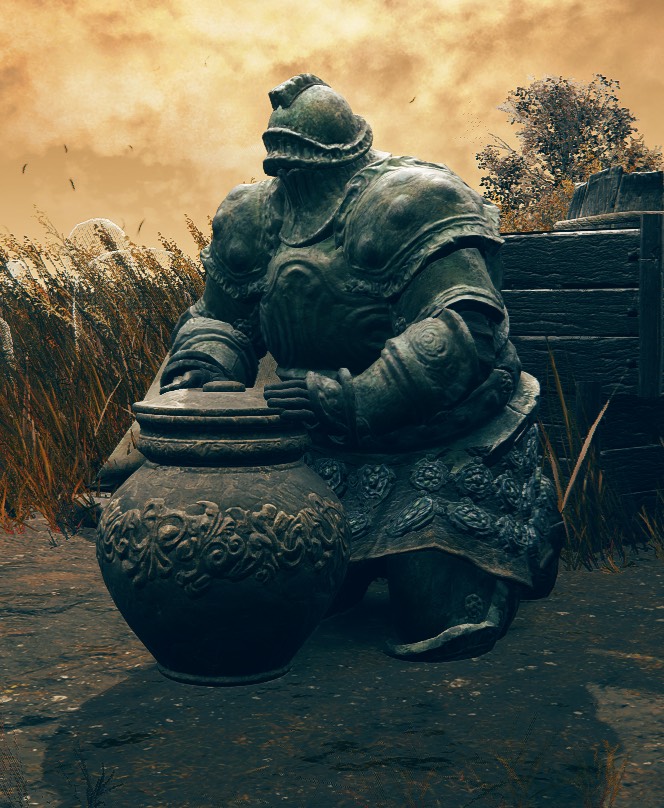
Moore is a knight who finds supplies for the allies who followed Miquella into the Realm of Shadow. He speaks in halting words, says "I like finding things", and treasures the insects who help him, the "forager brood". His gear is made of a metal called verdigris, described as "the gift of an outer god". After Miquella's charm fades, Moore begins to waver. "Our mother abandoned her brood. She did not love us. What should we do?" Who that mother is, is never said. But thinking of the insects described as servants of the Goddess of Rot who "have been forsaken", Moore and the forager brood may have been born on the side of rot, and abandoned. Depending on the player's answer, Moore chooses to let Miquella's love banish the pain, or accepts being "sad, forever". Moore, we think, kept asking straight out how someone who was never loved should live.
Who is Moore?
Soon after entering the Realm of Shadow in the DLC, SHADOW OF THE ERDTREE, you find a knight crouching beside a large jar. He wears heavy, greenish armor:
Hello there. Together, we work. Together, for Miquella the Kind. Many things, we have found.
—— Moore
He speaks slowly, in halting words. Moore’s role is to gather supplies and share them out among the allies who followed Miquella.
I like finding things. For you, Lady Leda, her allies, and the forager brood. Things bring joy to all.
—— Moore
I like finding things. Things bring joy to all. Moore’s joy is everyone else’s joy.
What is the “forager brood”?
The ones helping Moore gather are insects called the “forager brood”. They pick things up all over the Realm of Shadow.
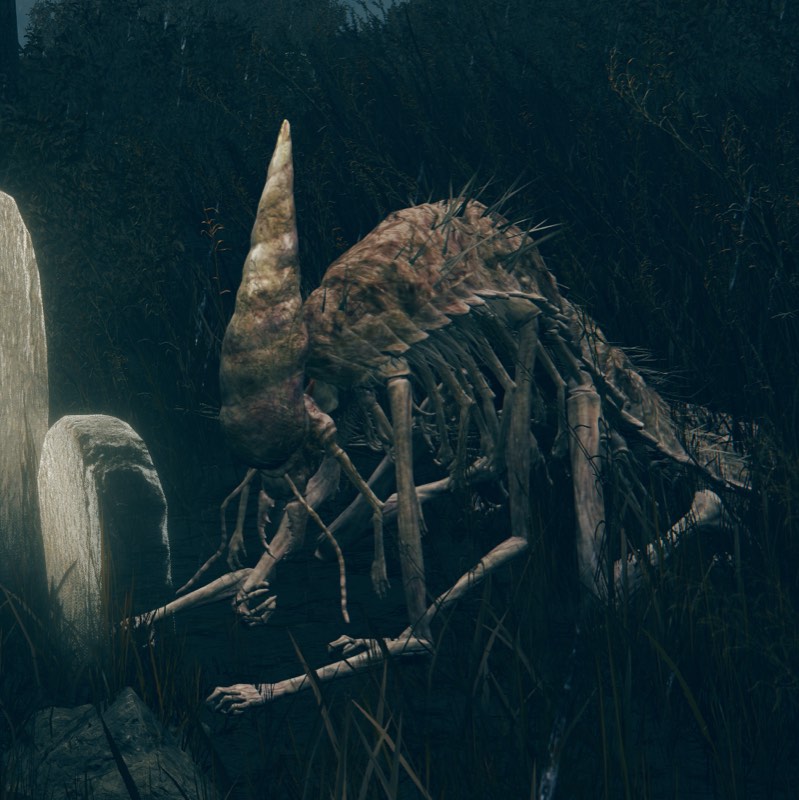
They look eerie, but to Moore they are dear companions. The old knight Ansbach asks the player:
Sir Moore traffics with the forager brood. His brethren who collect supplies from all corners of the land. No doubt they find inspiration in his many virtues. These are not your foes, Tarnished. Should you spot any forager brood, be sure to mind your manners.
—— Sir Ansbach
If the player hurts the forager brood, Moore grieves:
One of the forager brood was killed. This thing, is a tragedy. This thing, cannot be forgiven.
—— Moore
What does his verdigris gear tell us?
Moore’s armor and greatshield are made of a metal called verdigris:
Chest armor made from an unusual metal known as verdigris. Verdigris is said to be the gift of an outer god. Possessed of an enormously hefty yet supple strength thanks to its rusted nature.
—— Verdigris Armor
Verdigris is said to be the gift of an outer god. Thanks to its rusted nature.
“Rusted” and “outer god”. These two words bring to mind the outer god thought to be the source of the scarlet rot: the god of rot. Moore’s armor reads as a metal of the side of rot, one that draws strength from decay. More on the outer gods in What Is the Greater Will?
His greatshield says:
Greatshield made of the unusual metal known as verdigris. Boasts greater guard capacity than damage negation. To the extent that the shield will continue to protect its target even if its bearer should die.
—— Verdigris Greatshield
The shield will continue to protect its target even if its bearer should die. A shield for protecting someone. It suits Moore, who protects the forager brood.
What does “our mother abandoned her brood” mean?
This is the heart of every Moore theory.
Partway through the story, Miquella casts off his Great Rune, and the charm on those who followed him lifts. Moore was one of them:
I don’t feel it. It’s broken. Kind Miquella’s light is gone. But I stand tall. Together, we work. Together, for Miquella the Kind.
—— Moore
Even with the charm gone, Moore says, “I never change.” But after a while, he begins to waver:
I don’t know what to do. Our mother abandoned her brood. She did not love us. We are her children, what should we do? Must we be sad forever?
—— Moore
Our mother abandoned her brood. She did not love us.
Who the “mother” and her “brood” are, Moore never says.
For us, Moore and the forager brood may have been “kindred” of the Goddess of Rot. From the flower of rot that bloomed at Aeonia came pale, insect-like “Kindred of Rot”. Their ashes say:
This spirit takes the form of a crawling pest, its chitinous body making a dry rustling sound. Attacks enemies by secreting sticky threads. The Kindred of Rot are the servants of the Goddess of Rot—servants that have been forsaken.
—— Kindred of Rot Ashes
The servants of the Goddess of Rot—servants that have been forsaken.
Servants of the Goddess of Rot, forsaken by that very goddess. It lines up exactly with Moore’s “our mother abandoned her brood. She did not love us.” Moore, who wears the rusted “gift of an outer god” and calls insects his companions, may have been one of those abandoned children. More on the Goddess of Rot in Who Is Malenia?
But no text says that Moore is one of the Kindred. This is our reasoning.
How does the player’s answer change him?
The player can answer the wavering Moore.
Point him to Miquella’s love, and he says:
Hm. Maybe that’s Kindly Miquella’s love. Love for all the unloved. Love, to banish the pain.
—— Moore
Yes. The unloved, every single one of us… can banish our pain forever.
—— Moore
The unloved, every single one of us, can banish our pain forever.
Miquella was the Empyrean who tried to love everything. Through his charm, that love can make people forget even the pain of being unloved. Moore chooses to accept it.
Answer instead that the sadness will last forever, and he says:
Hmm. Sad, forever. Sad, forever and ever.
—— Moore
If the player says they don’t know either, Moore says “I don’t know either.” And, still unsure, he finds his place:
I don’t know how to be. Still. I have my brood. I enjoy foraging. It is enough.
—— Moore
Still. I have my brood. It is enough.
For us, this third answer feels the most like Moore. Neither forgetting the pain of being unloved nor grieving forever. Staying unsure, and getting on happily with the companions in front of him. A small way of living that does not lean on a god’s love.
What becomes of Moore when his allies are gone?
As the story goes on, Miquella’s allies each choose their own road and leave:
My brood is no more. No one comes to visit. Not Lady Leda. Not Father Dane. Not Sir Ansbach. Not Freyja. Not Thiollier. Not the hornsent. Where have they all gone?
—— Moore
Thank you. No one comes to visit. Except you.
—— Moore
Moore does not know that his allies are purging one another and crossing blades. He only misses them, because no one comes anymore. For players who know Ansbach’s and Freyja’s stories, it is a very hard line. More in Who Is Sir Ansbach? and Who Is Redmane Freyja?
And if the player takes the road against Miquella, Moore too may stand against them as an enemy:
Miquella the Kind… will help us forget.
—— Moore
One day, you will forget. The guidance…
—— Moore
Moore, who once told the player “I like you”, fights them, saying “you and I, fighting. A tragedy, this is.” Those who left their pain with Miquella’s love had no choice but to fight for that love.
What the Japanese text says
This site reads the game in the original Japanese. The English answers a question that the Japanese leaves open.
- “Our mother abandoned her brood. She did not love us. We are her children.” The Japanese is 「…母が、子どもたちを棄てた/母は、愛さなかった/子どもたちは、どうすればいい?」: a mother abandoned the children. The mother did not love. What should the children do? There is no our, no us, no we. In Japanese, Moore speaks in the third person, and whether he is one of those children is left unsaid. The English makes him say plainly that he is.
- “His brethren who collect supplies.” Ansbach’s Japanese is 「各地で物資を収集してくれる、仲間たちがいるそうで」: it seems he has companions who gather supplies everywhere. 仲間 means comrades, not brethren. The English hints at kinship again.
- “My brood is no more.” 「…仲間たちが、いなくなった」: my comrades are gone. In Japanese, the ones who have gone are Leda, Dane, Ansbach and the others named next, not the forager brood.
- “Love, to banish the pain.” 「痛みを忘れて、しまうように」: so that the pain is forgotten. 忘れてしまう has a note of regret, to end up forgetting. In Japanese, Miquella’s love makes the unloved forget, as much as it heals them.
- “I like finding things.” 「…調達は、楽しい」: procuring is fun. 調達 is a slightly formal, military word for supplying; it is funny coming from Moore.
What we still do not know
Who Moore’s “mother” is, is never told. Reading her as the Goddess of Rot is our reasoning.
The face beneath Moore’s helm is never shown. No text says whether Moore is truly one of the Kindred of Rot, or a person.
And where did the forager brood come from? Why do they gather things for Moore? That is still unknown.